Exam-Style Problems
⬅ Back to SubchapterJune 2016 p42 q1
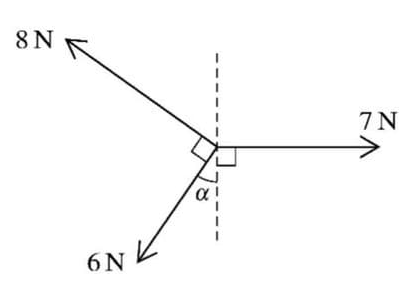
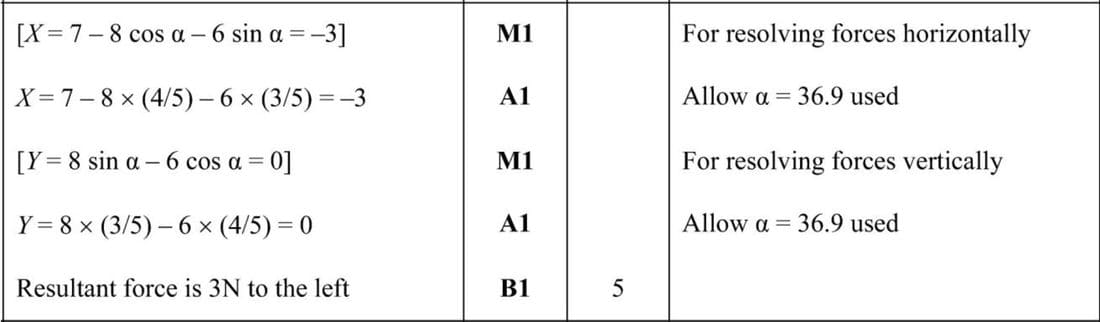
Coplanar forces of magnitudes 7 N, 6 N, and 8 N act at a point in the directions shown in the diagram. Given that \(\sin \alpha = \frac{3}{5}\), find the magnitude and direction of the resultant of the three forces.
Feb/Mar 2016 p42 q3
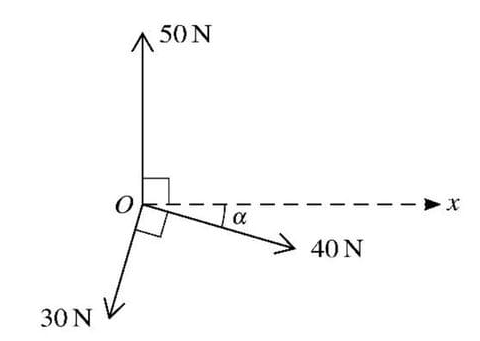
Coplanar forces of magnitudes 50 N, 40 N, and 30 N act at a point O in the directions shown in the diagram, where \(\tan \alpha = \frac{7}{24}\).
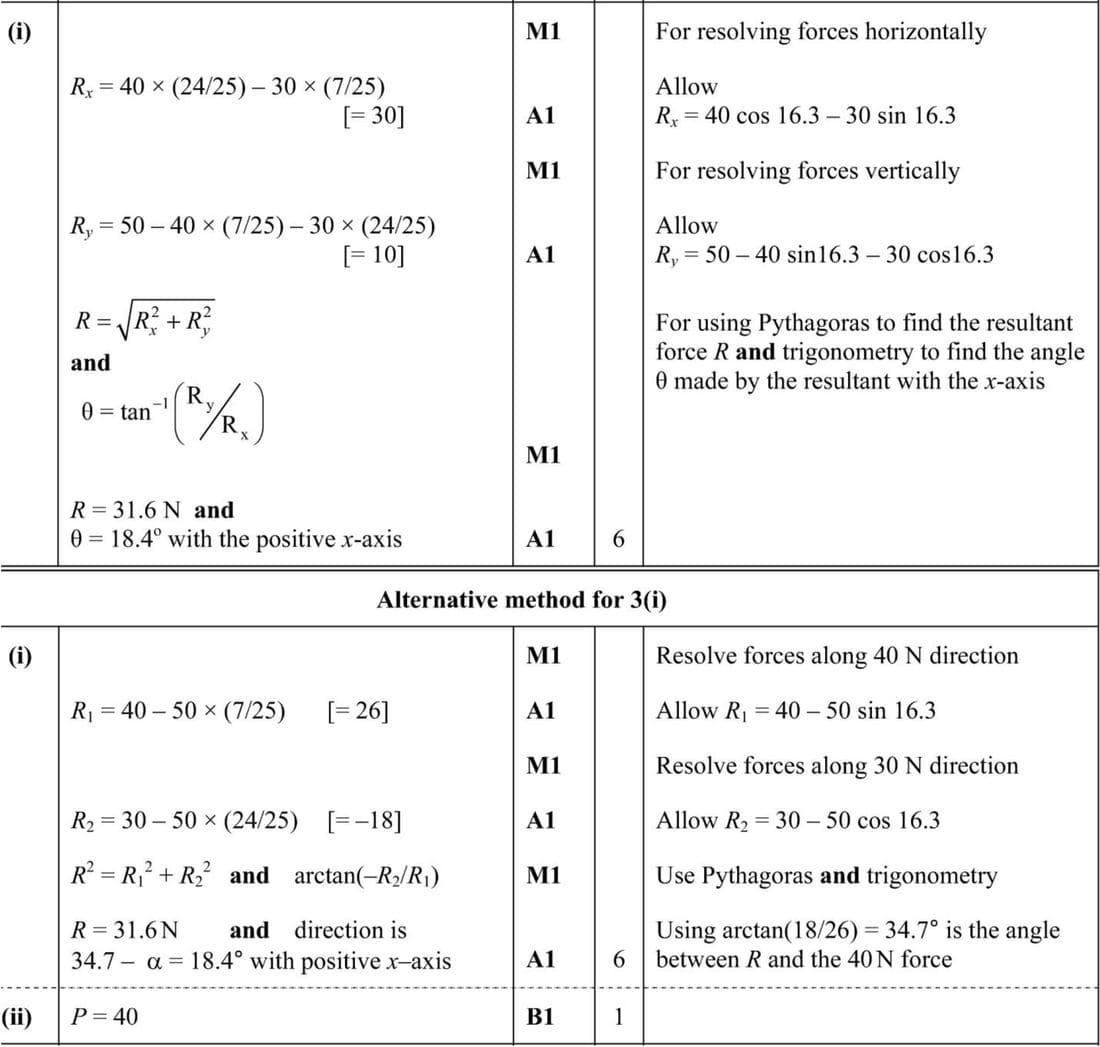
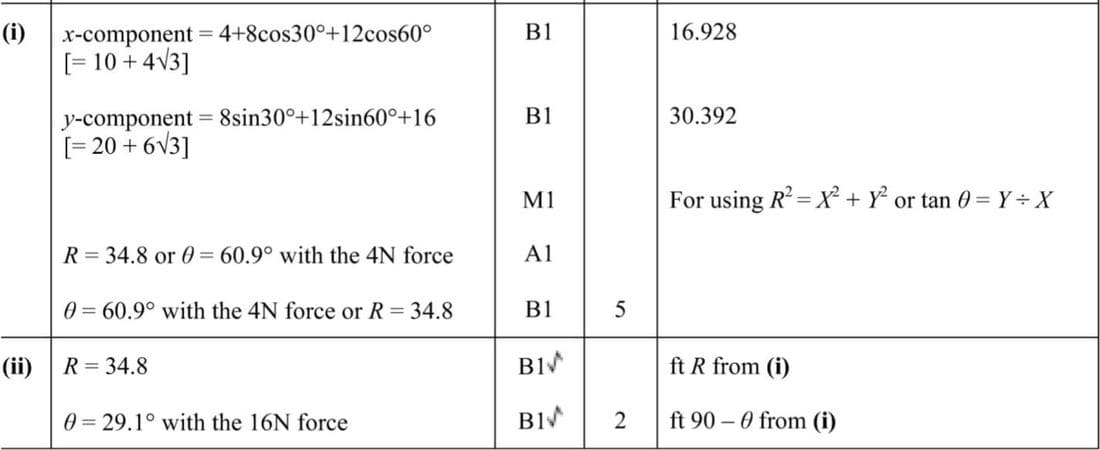
(i) Find the magnitude and direction of the resultant of the three forces.
(ii) The force of magnitude 50 N is replaced by a force of magnitude \(P\) N acting in the same direction. The resultant of the three forces now acts in the positive \(x\)-direction. Find the value of \(P\).
Nov 2015 p43 q3
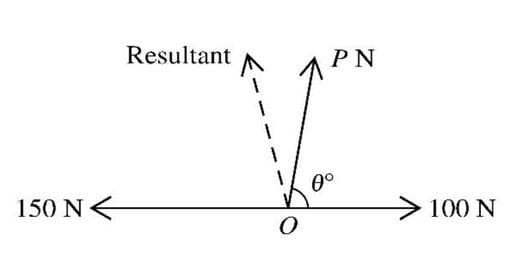
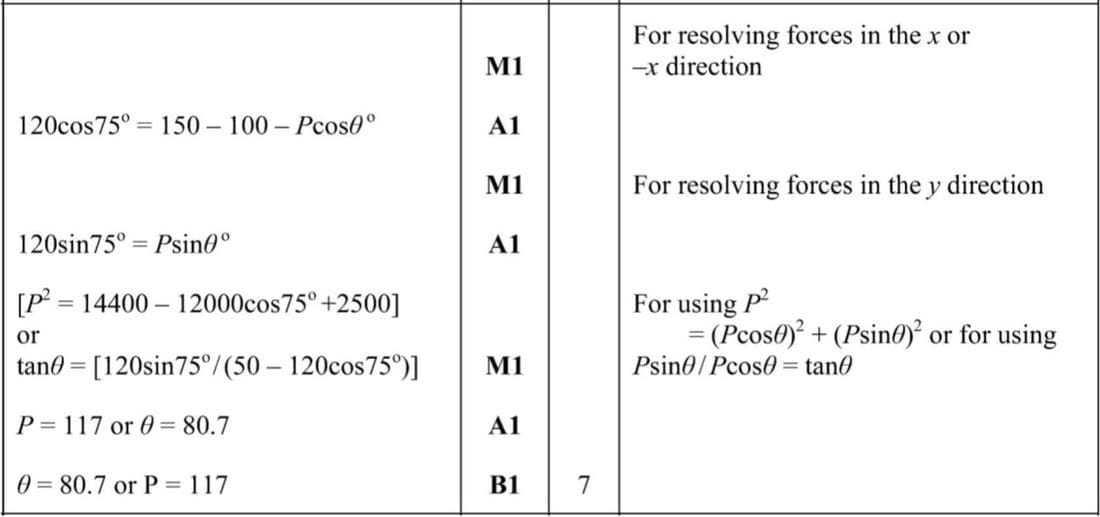
Three horizontal forces of magnitudes 150 N, 100 N, and \(P\) N have directions as shown in the diagram. The resultant of the three forces is shown by the broken line in the diagram. This resultant has magnitude 120 N and makes an angle 75° with the 150 N force. Find the values of \(P\) and \(\theta\).
June 2015 p43 q5
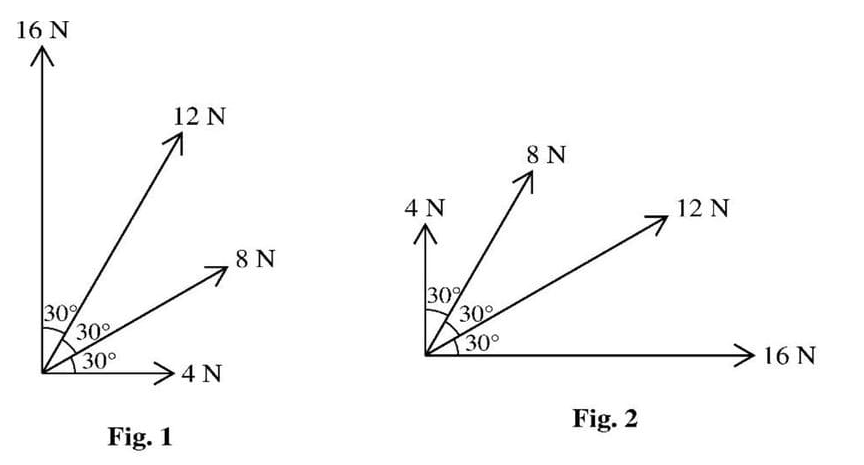
Four coplanar forces of magnitudes 4 N, 8 N, 12 N, and 16 N act at a point. The directions in which the forces act are shown in Fig. 1.
(i) Find the magnitude and direction of the resultant of the four forces.
The forces of magnitudes 4 N and 16 N exchange their directions and the forces of magnitudes 8 N and 12 N also exchange their directions (see Fig. 2).
(ii) State the magnitude and direction of the resultant of the four forces in Fig. 2.
June 2014 p41 q3
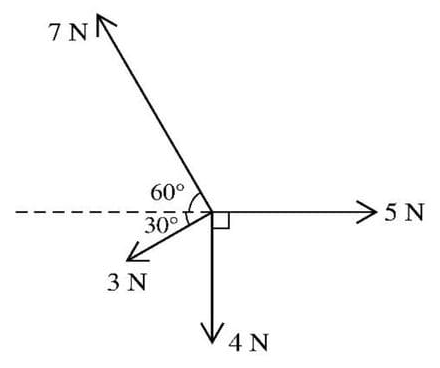
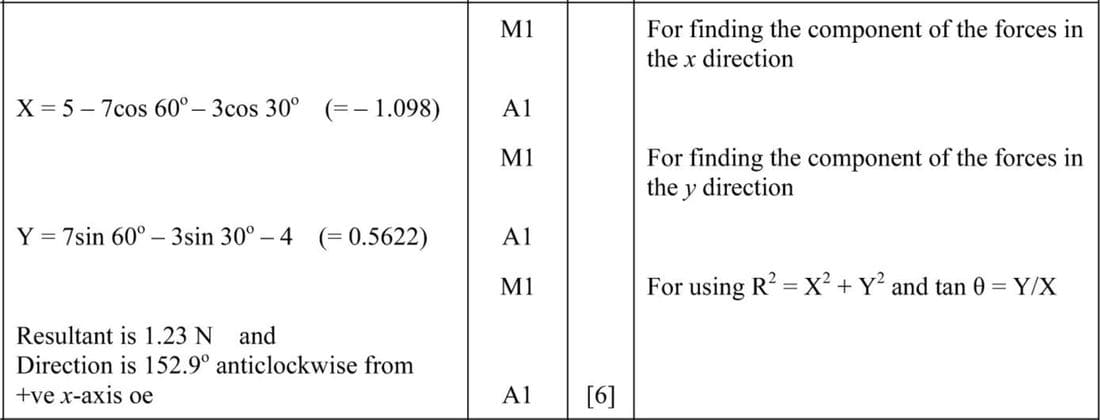
Four coplanar forces act at a point. The magnitudes of the forces are 5 N, 4 N, 3 N, and 7 N, and the directions in which the forces act are shown in the diagram. Find the magnitude and direction of the resultant of the four forces.