Exam-Style Problems
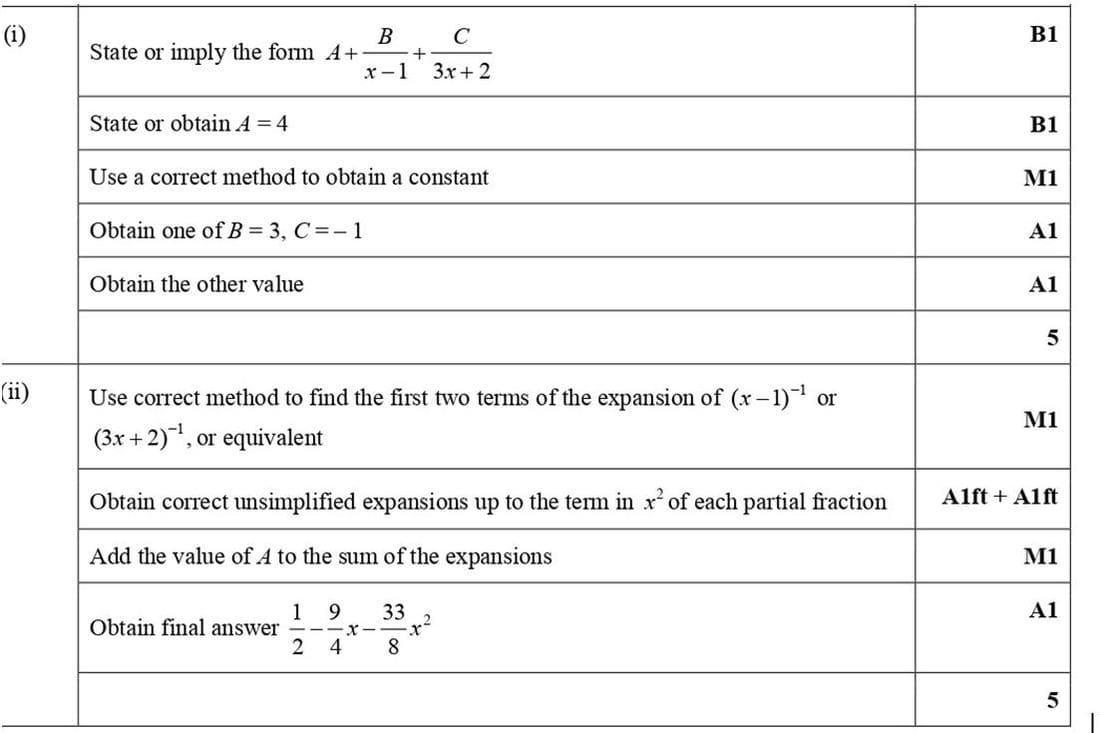
⬅ Back to SubchapterJune 2018 p31 q9
2054
Let \(f(x) = \frac{12x^2 + 4x - 1}{(x-1)(3x+2)}\).
(i) Express \(f(x)\) in partial fractions.
(ii) Hence obtain the expansion of \(f(x)\) in ascending powers of \(x\), up to and including the term in \(x^2\).
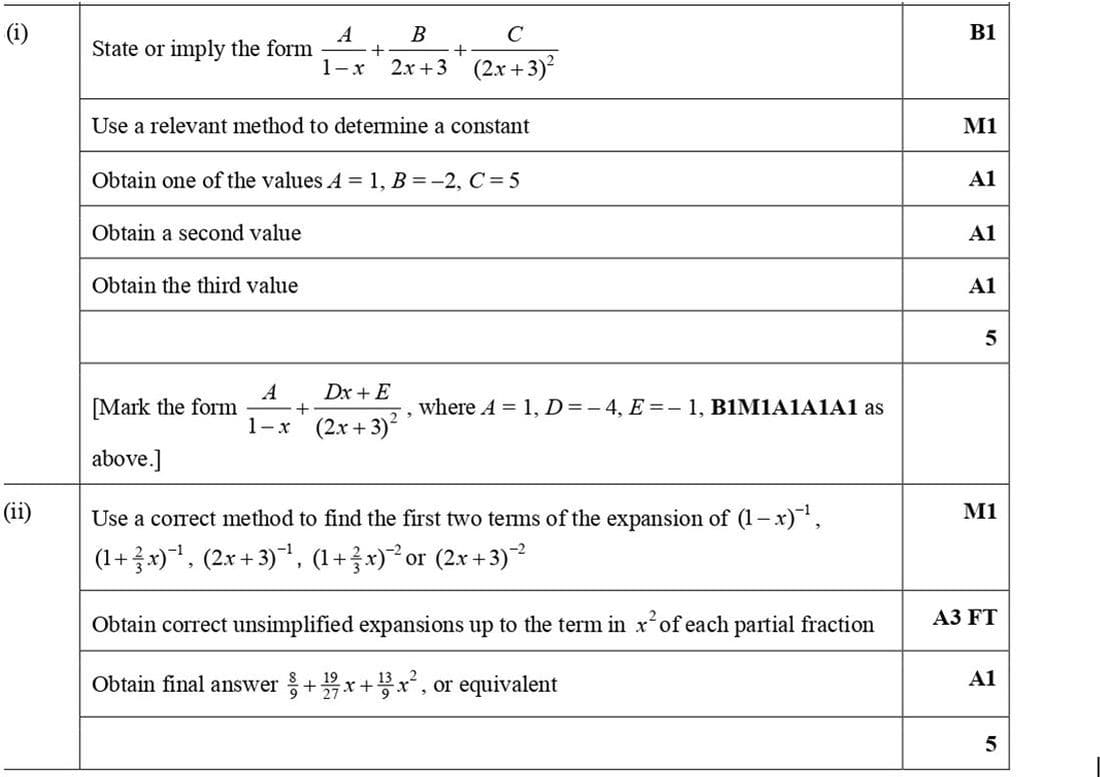
Nov 2017 p32 q8
2055
Let \(f(x) = \frac{8x^2 + 9x + 8}{(1-x)(2x+3)^2}\).
(i) Express \(f(x)\) in partial fractions.
(ii) Hence obtain the expansion of \(f(x)\) in ascending powers of \(x\), up to and including the term in \(x^2\).
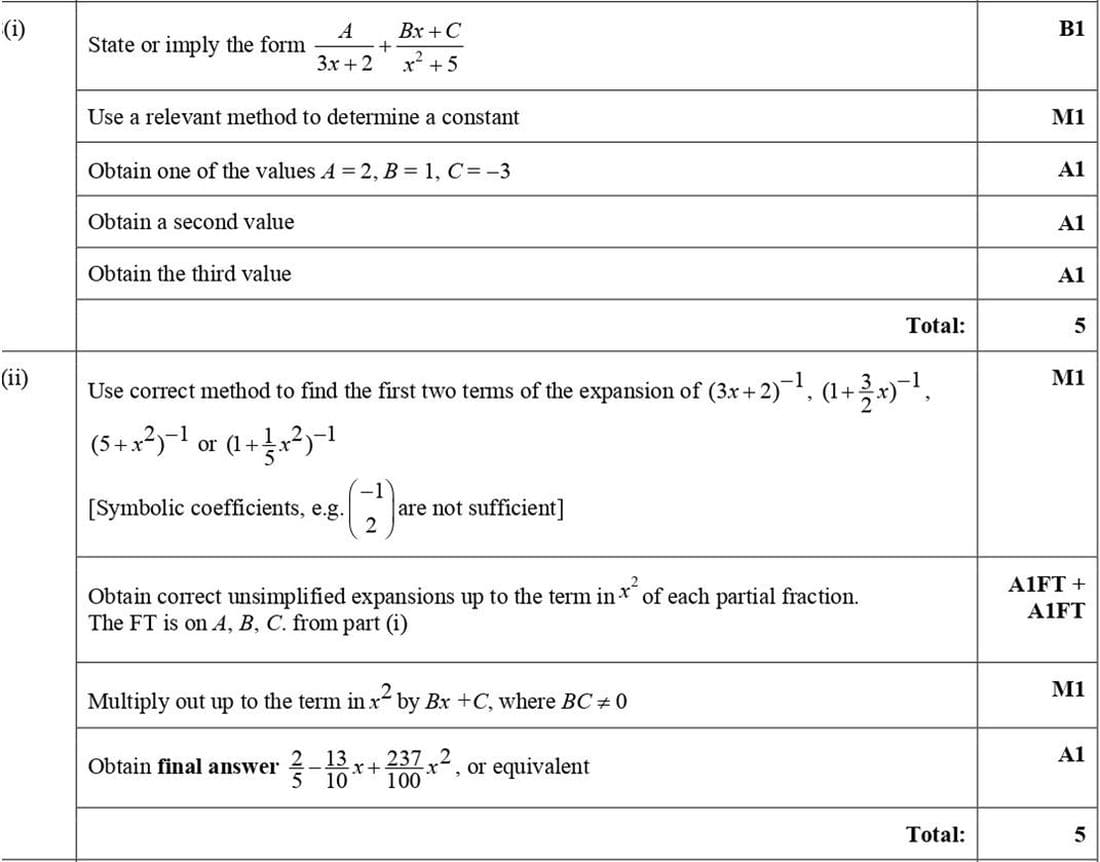
June 2017 p32 q8
2056
Let \(f(x) = \frac{5x^2 - 7x + 4}{(3x + 2)(x^2 + 5)}\).
(i) Express \(f(x)\) in partial fractions.
(ii) Hence obtain the expansion of \(f(x)\) in ascending powers of \(x\), up to and including the term in \(x^2\).
Feb/Mar 2017 p32 q9
2057
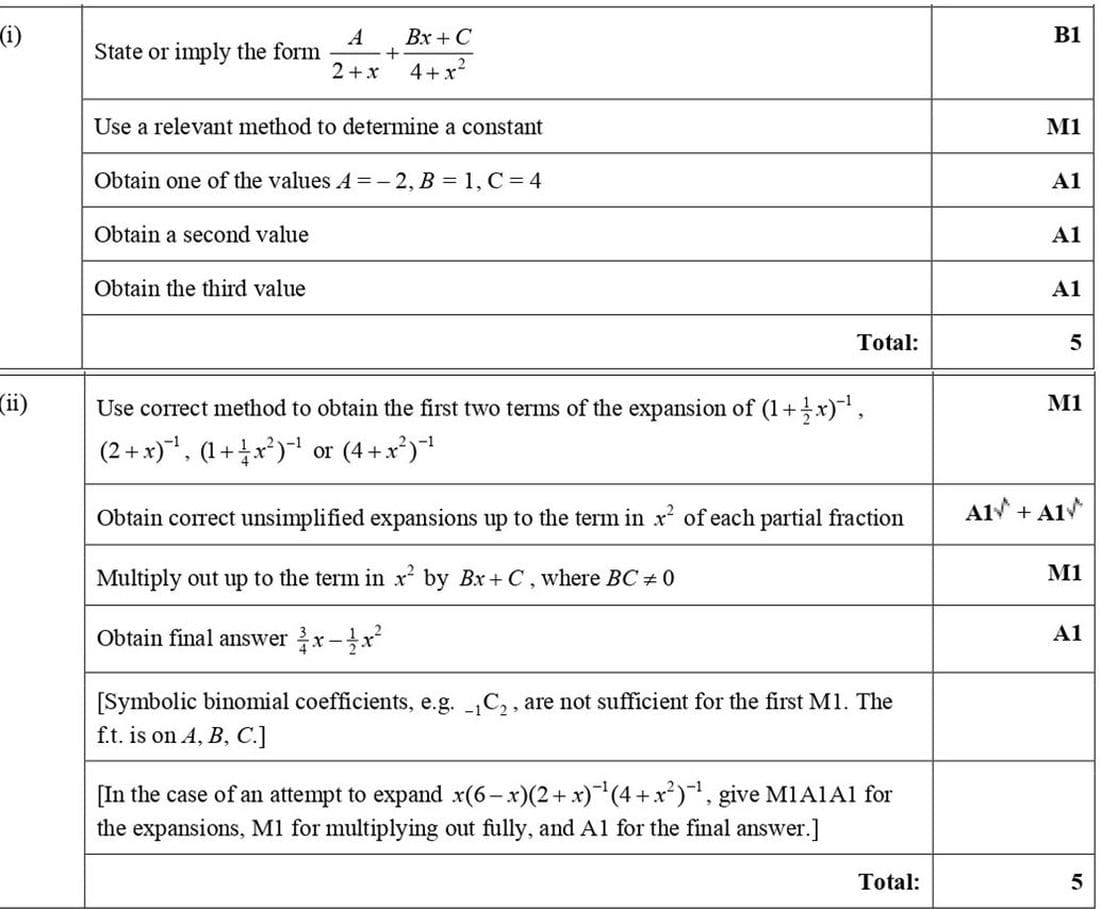
Let \(f(x) = \frac{x(6-x)}{(2+x)(4+x^2)}\).
(i) Express \(f(x)\) in partial fractions.
(ii) Hence obtain the expansion of \(f(x)\) in ascending powers of \(x\), up to and including the term in \(x^2\).
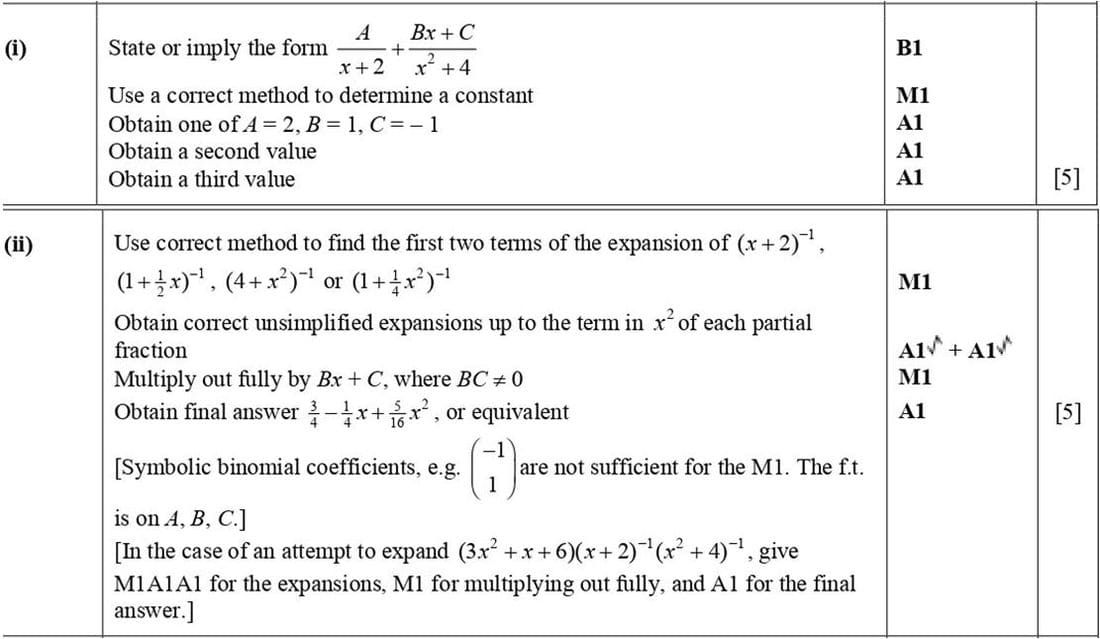
Nov 2016 p33 q8
2058
Let \(f(x) = \frac{3x^2 + x + 6}{(x+2)(x^2+4)}\).
(i) Express \(f(x)\) in partial fractions.
(ii) Hence obtain the expansion of \(f(x)\) in ascending powers of \(x\), up to and including the term in \(x^2\).