Exam-Style Problems
⬅ Back to SubchapterNov 2017 p41 q1
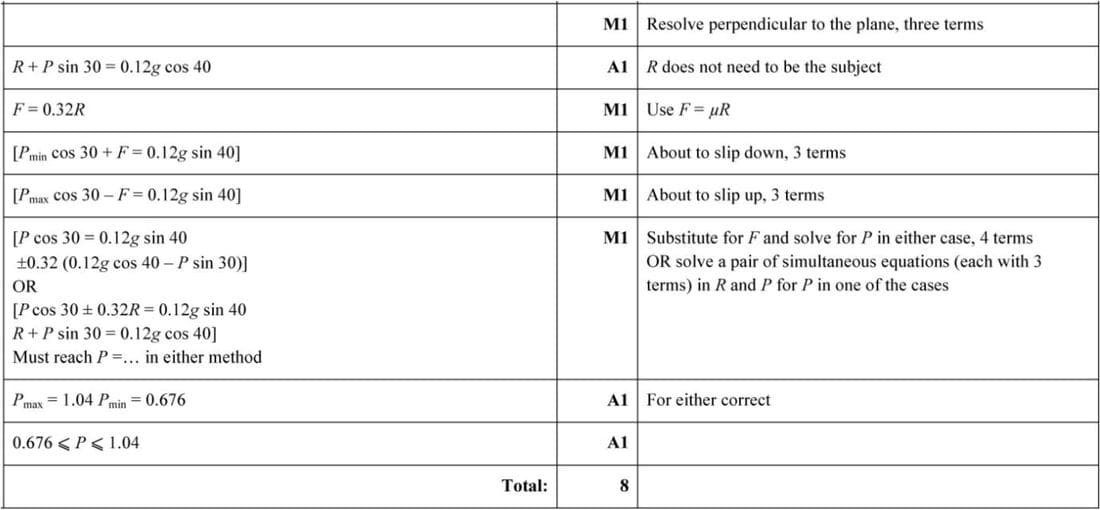
A block of mass 3 kg is initially at rest on a smooth horizontal floor. A force of 12 N, acting at an angle of 25° above the horizontal, is applied to the block. Find the distance travelled by the block in the first 5 seconds of its motion.
Nov 2015 p41 q5
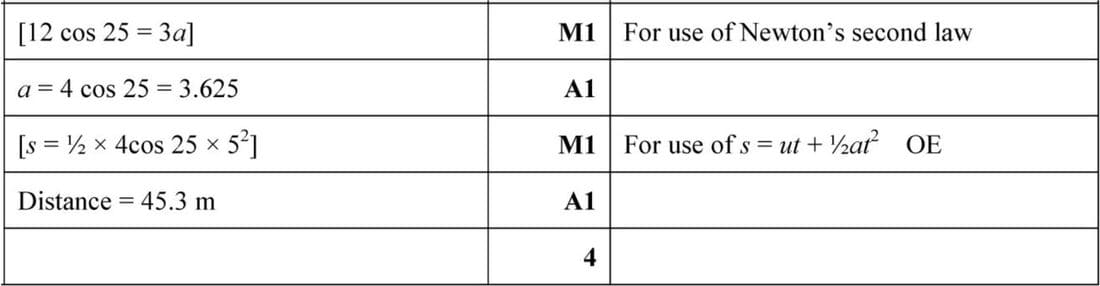
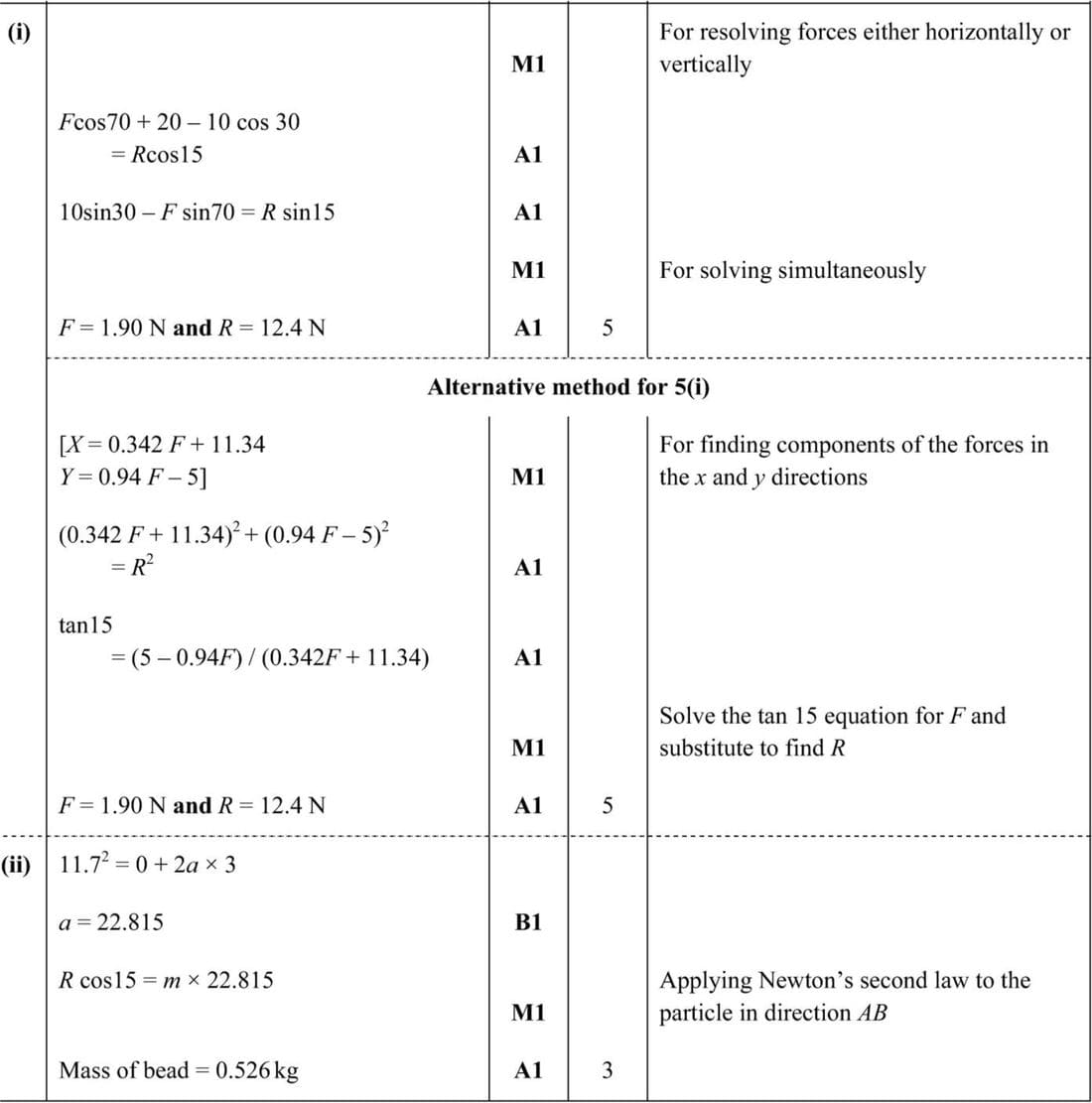
A small bead Q can move freely along a smooth horizontal straight wire AB of length 3 m. Three horizontal forces of magnitudes F N, 10 N, and 20 N act on the bead in the directions shown in the diagram. The magnitude of the resultant of the three forces is R N in the direction shown in the diagram.
(i) Find the values of F and R.
(ii) Initially the bead is at rest at A. It reaches B with a speed of 11.7 m s-1. Find the mass of the bead.
June 2013 p41 q6
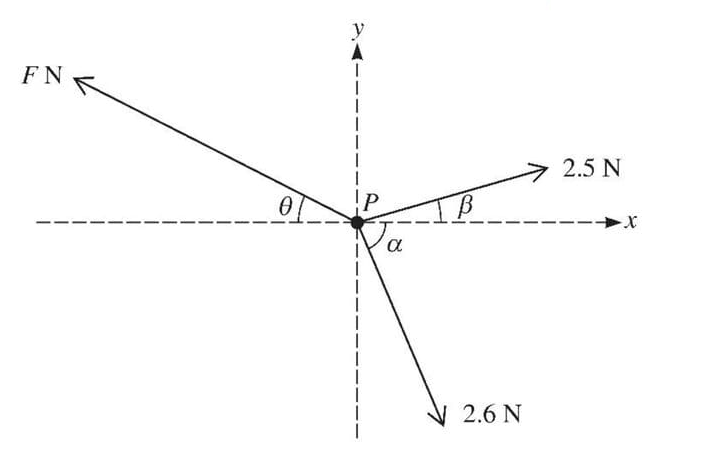
A particle P of mass 0.5 kg lies on a smooth horizontal plane. Horizontal forces of magnitudes F N, 2.5 N, and 2.6 N act on P. The directions of the forces are as shown in the diagram, where \(\tan \alpha = \frac{12}{5}\) and \(\tan \beta = \frac{7}{24}\).
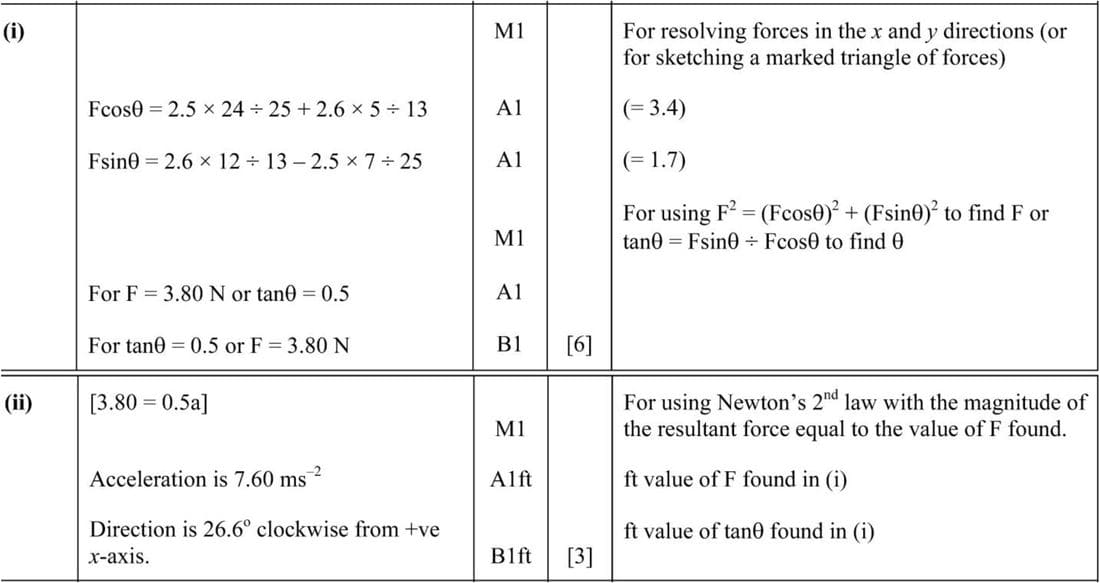
(i) Given that P is in equilibrium, find the values of F and \(\tan \theta\).
(ii) The force of magnitude F N is removed. Find the magnitude and direction of the acceleration with which P starts to move.
June 2023 p42 q5
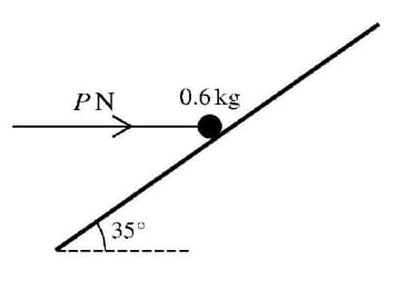
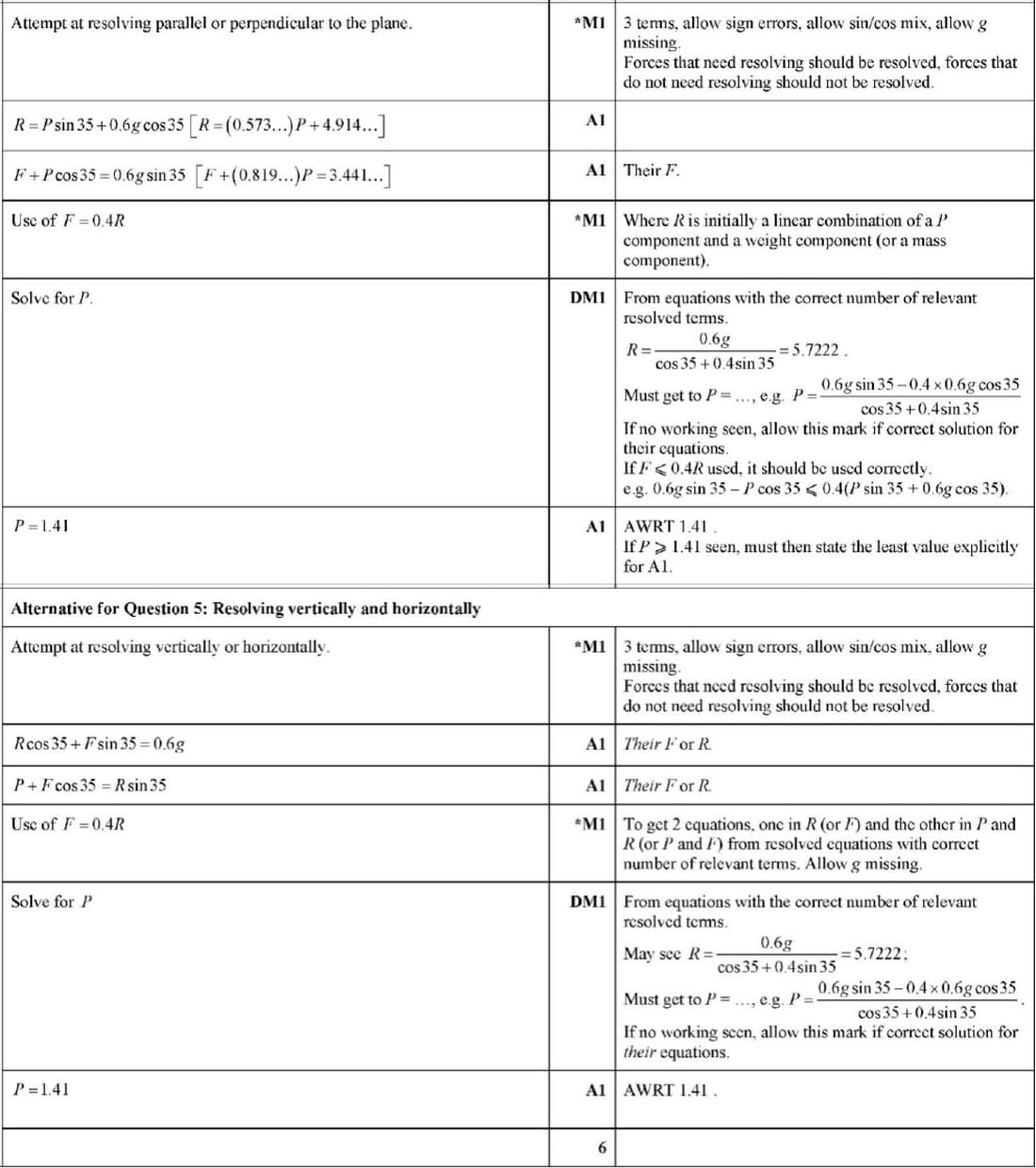
A particle of mass 0.6 kg is placed on a rough plane which is inclined at an angle of 35° to the horizontal. The particle is kept in equilibrium by a horizontal force of magnitude \(P\) N acting in a vertical plane containing a line of greatest slope (see diagram). The coefficient of friction between the particle and plane is 0.4.
Find the least possible value of \(P\).
June 2017 p42 q5
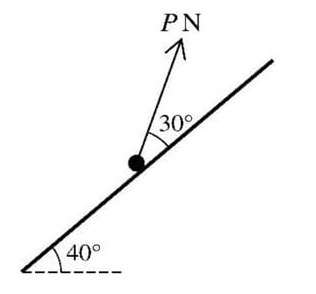
A particle of mass 0.12 kg is placed on a plane which is inclined at an angle of 40° to the horizontal. The particle is kept in equilibrium by a force of magnitude \(P N\) acting up the plane at an angle of 30° above a line of greatest slope, as shown in the diagram. The coefficient of friction between the particle and the plane is 0.32. Find the set of possible values of \(P\).