Exam-Style Problems
⬅ Back to SubchapterJune 2015 p31 q9
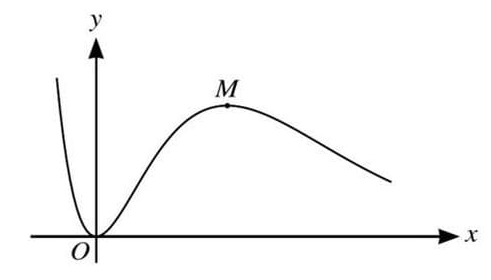
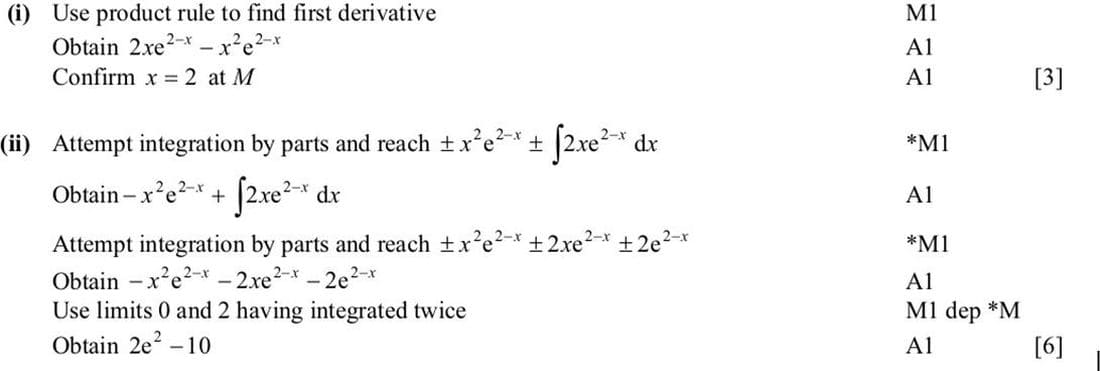
The diagram shows the curve \(y = x^2 e^{2-x}\) and its maximum point \(M\).
(i) Show that the \(x\)-coordinate of \(M\) is 2.
(ii) Find the exact value of \(\int_0^2 x^2 e^{2-x} \, dx\).
June 2014 p32 q8
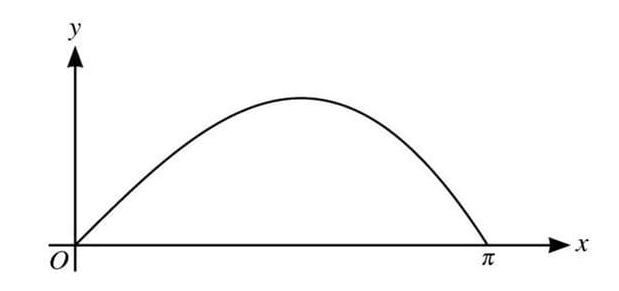
The diagram shows the curve \(y = x \cos \frac{1}{2}x\) for \(0 \leq x \leq \pi\).
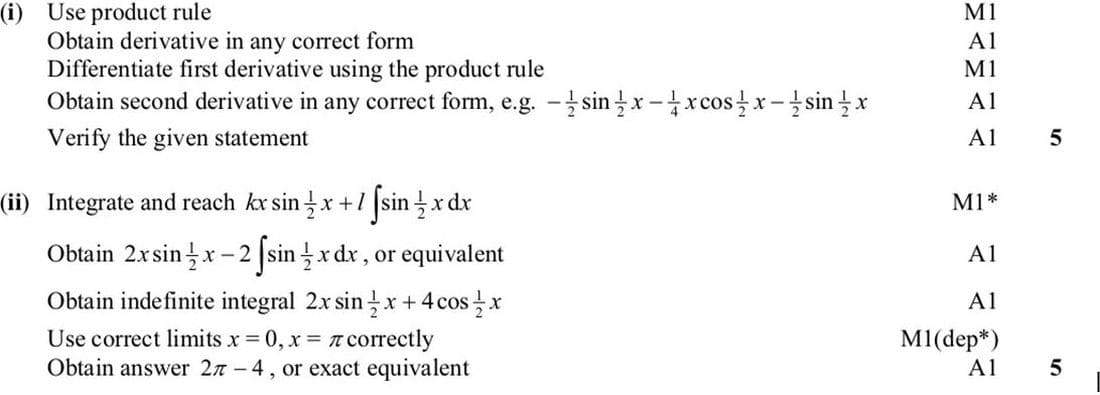
(i) Find \(\frac{dy}{dx}\) and show that \(4 \frac{d^2y}{dx^2} + y + 4 \sin \frac{1}{2}x = 0\).
(ii) Find the exact value of the area of the region enclosed by this part of the curve and the x-axis.
Nov 2011 p31 q9
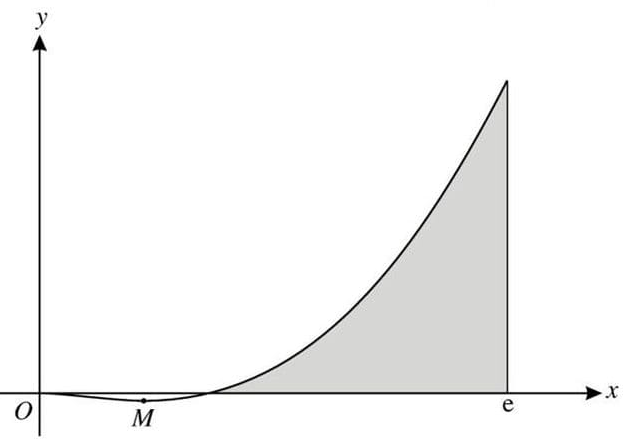
The diagram shows the curve \(y = x^2 \ln x\) and its minimum point \(M\).
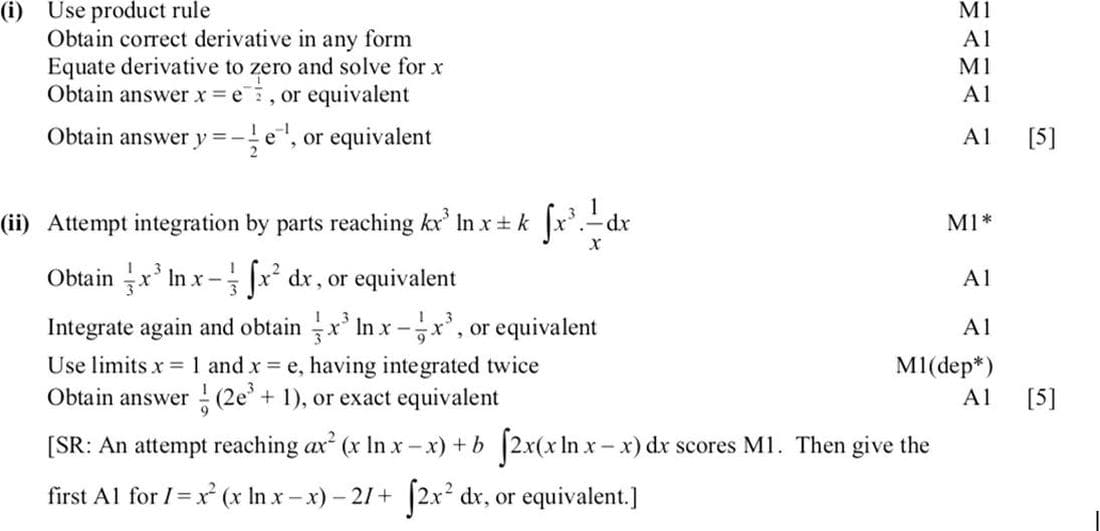
(i) Find the exact values of the coordinates of \(M\).
(ii) Find the exact value of the area of the shaded region bounded by the curve, the \(x\)-axis and the line \(x = e\).
June 2011 p32 q10
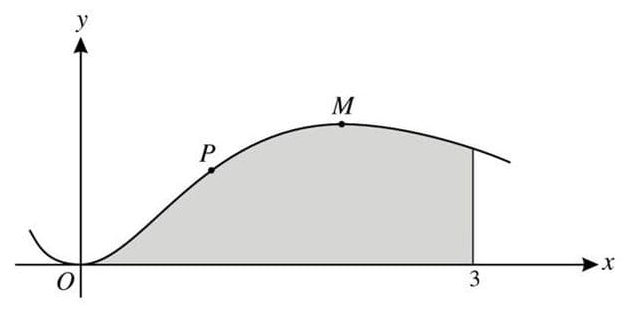
The diagram shows the curve \(y = x^2 e^{-x}\).
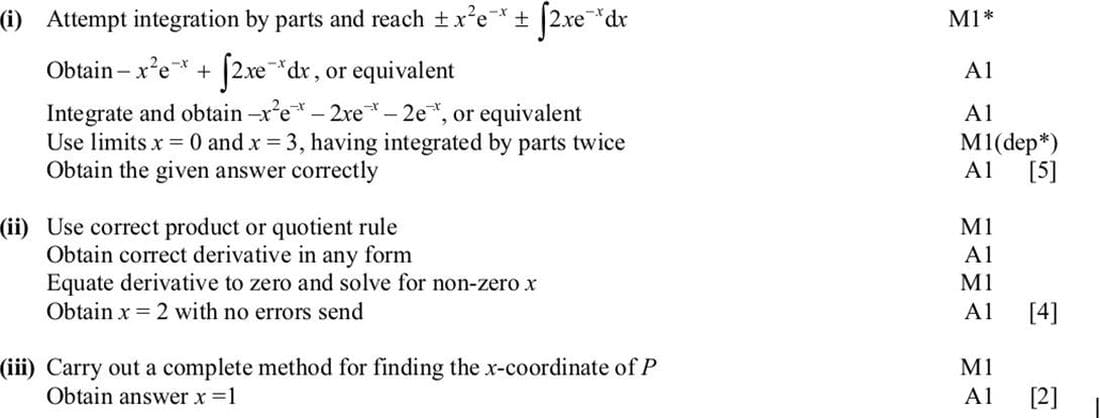
(i) Show that the area of the shaded region bounded by the curve, the \(x\)-axis and the line \(x = 3\) is equal to \(2 - \frac{17}{e^3}\).
(ii) Find the \(x\)-coordinate of the maximum point \(M\) on the curve.
(iii) Find the \(x\)-coordinate of the point \(P\) at which the tangent to the curve passes through the origin.
Nov 2010 p31 q9
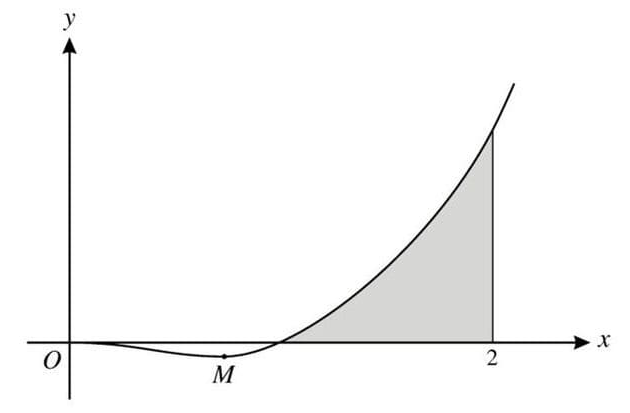
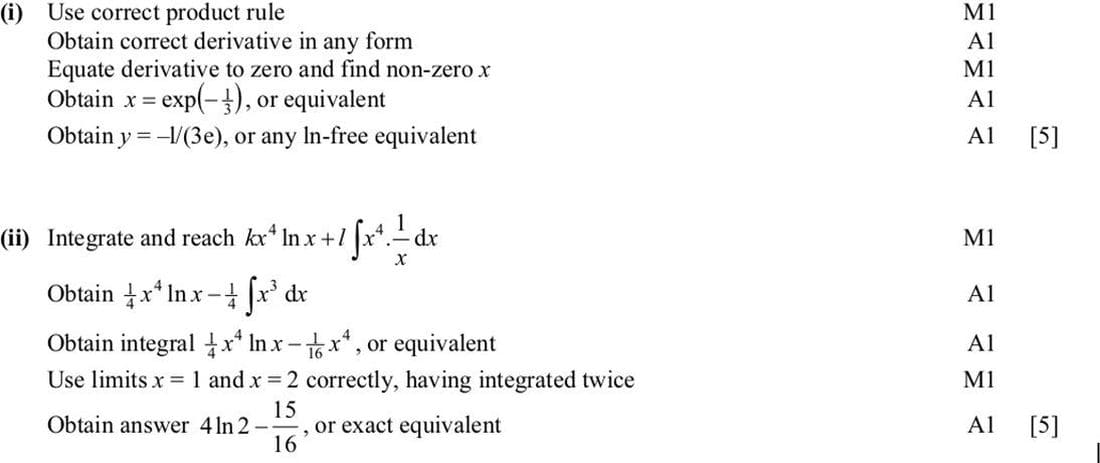
The diagram shows the curve \(y = x^3 \ln x\) and its minimum point \(M\).
(i) Find the exact coordinates of \(M\).
(ii) Find the exact area of the shaded region bounded by the curve, the \(x\)-axis and the line \(x = 2\).