Exam-Style Problems
⬅ Back to SubchapterNov 2010 p42 q3
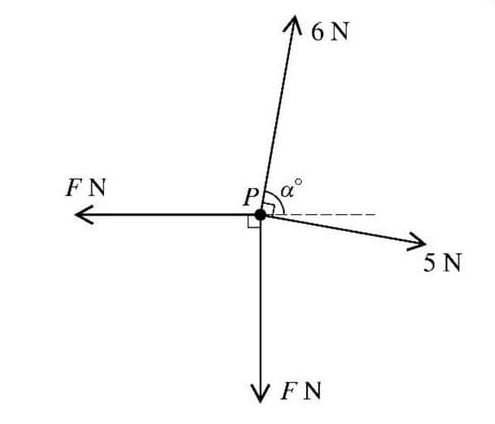
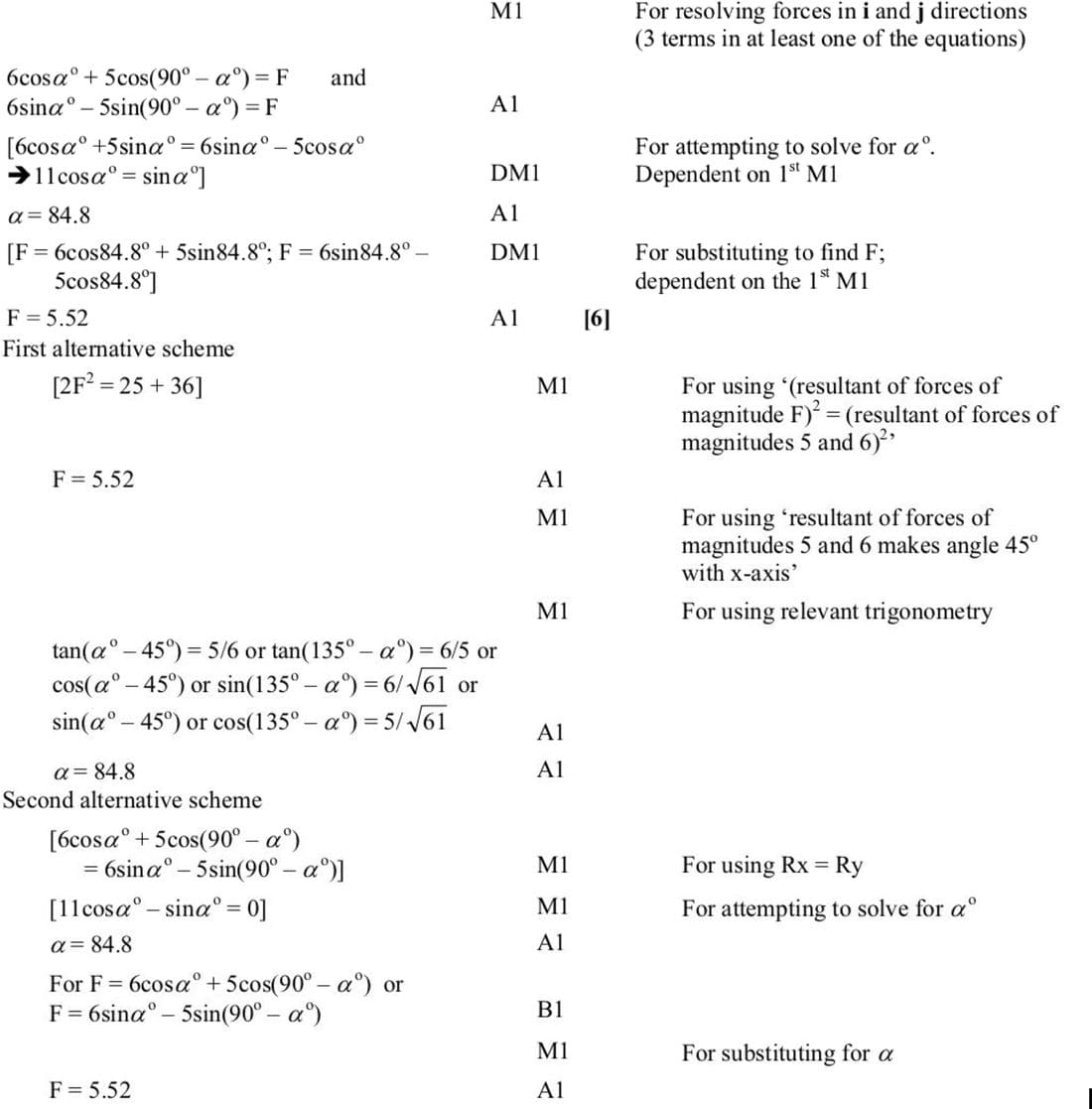
A particle P is in equilibrium on a smooth horizontal table under the action of four horizontal forces of magnitudes 6 N, 5 N, F N and F N acting in the directions shown. Find the values of \(\alpha\) and \(F\).
June 2008 p4 q3
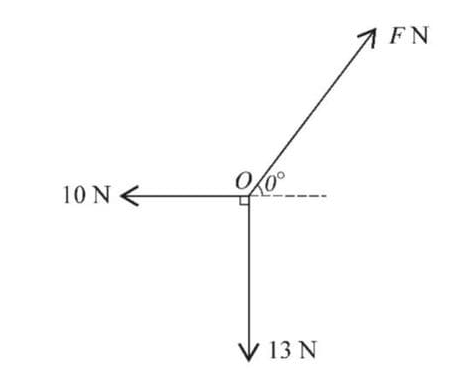
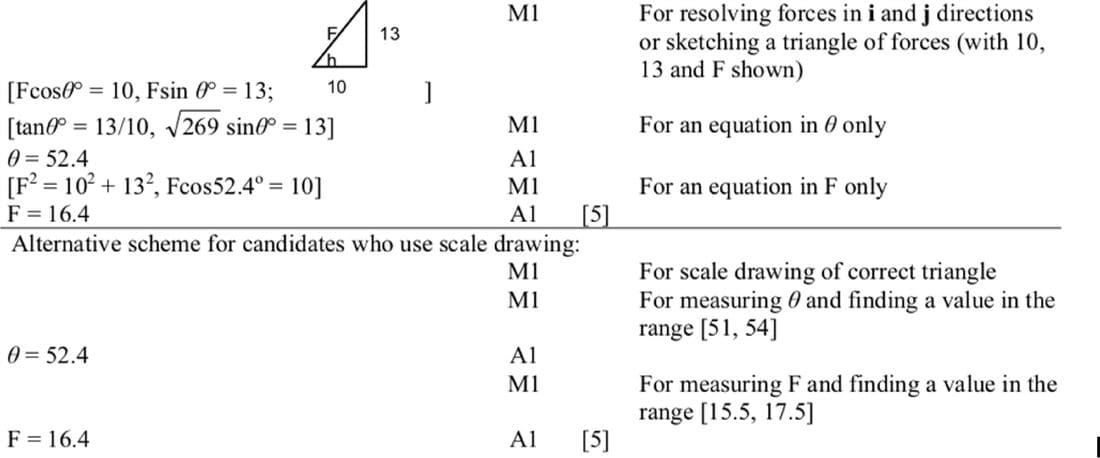
Three horizontal forces of magnitudes \(F\) N, 13 N, and 10 N act at a fixed point \(O\) and are in equilibrium. The directions of the forces are as shown in the diagram. Find, in either order, the value of \(\theta\) and the value of \(F\).
June 2006 p4 q3
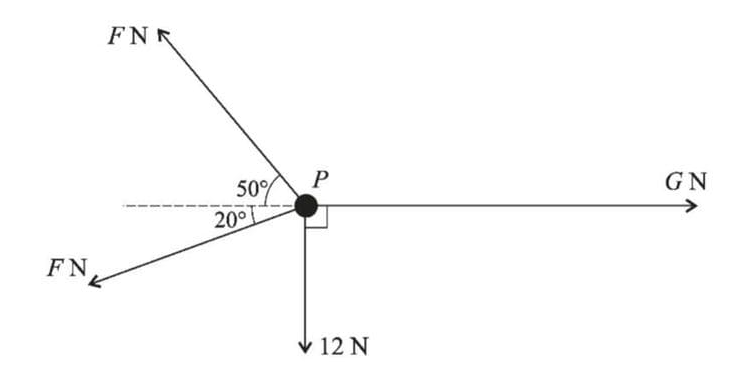
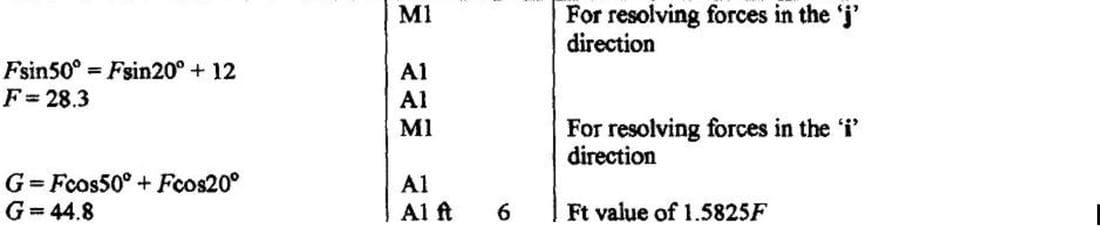
A particle P is in equilibrium on a smooth horizontal table under the action of horizontal forces of magnitudes F N, F N, G N and 12 N acting in the directions shown. Find the values of F and G.
June 2022 p41 q4
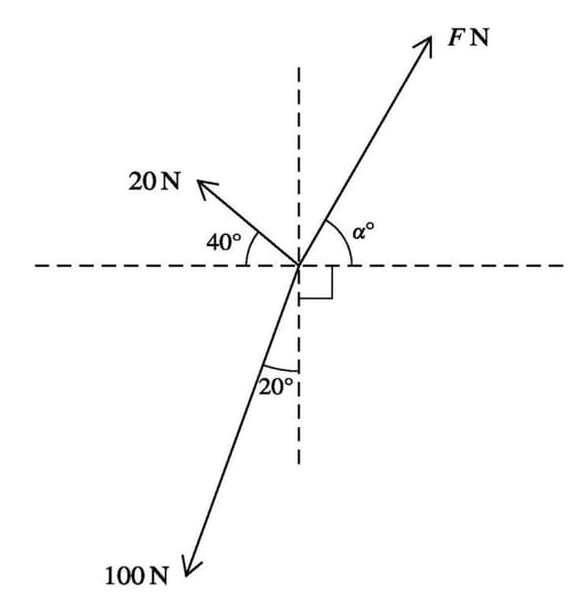
Three coplanar forces of magnitudes 20 N, 100 N and \(F\) N act at a point. The directions of these forces are shown in the diagram.
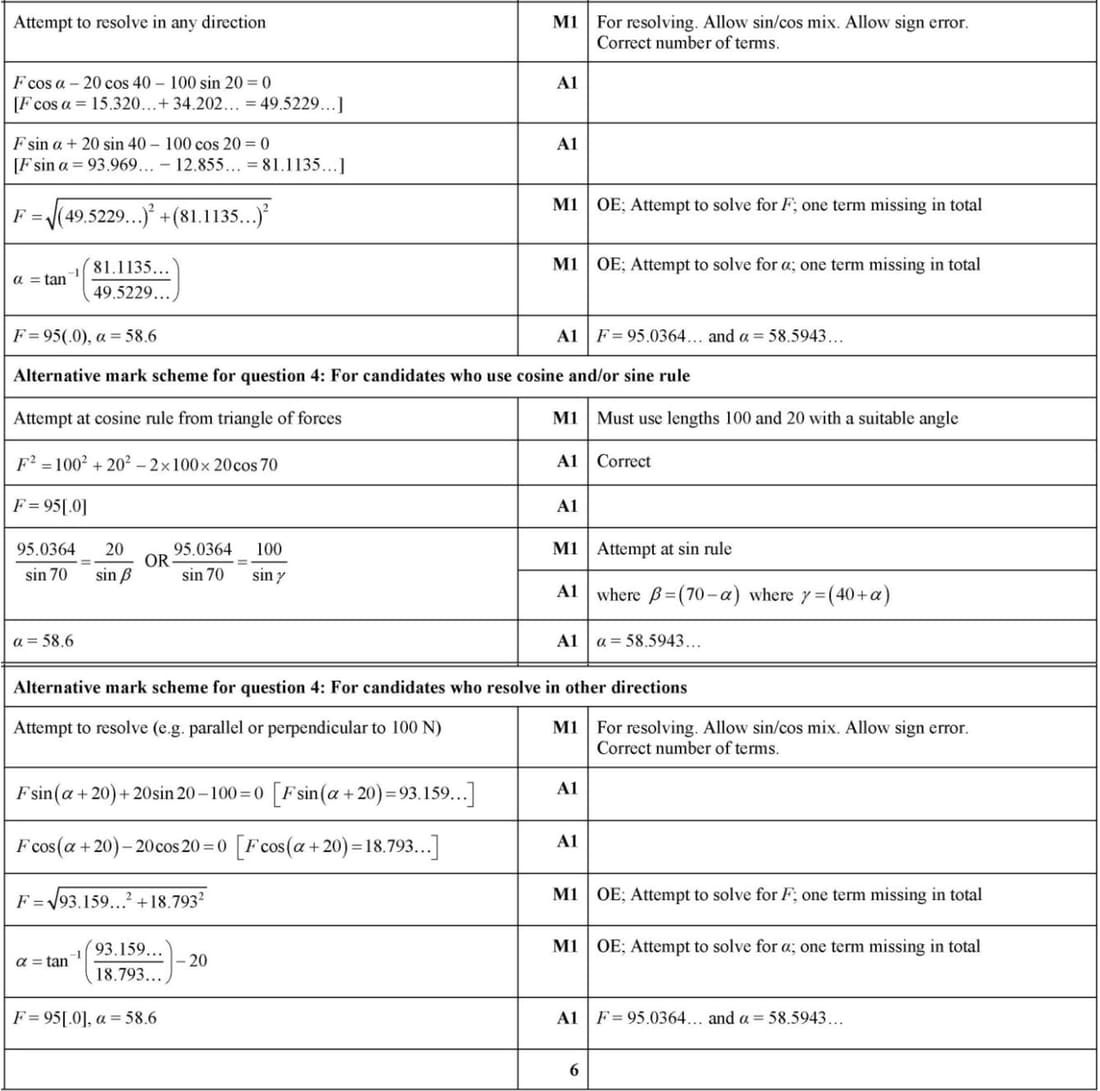
Given that the three forces are in equilibrium, find \(F\) and \(\alpha\).
Nov 2021 p41 q3
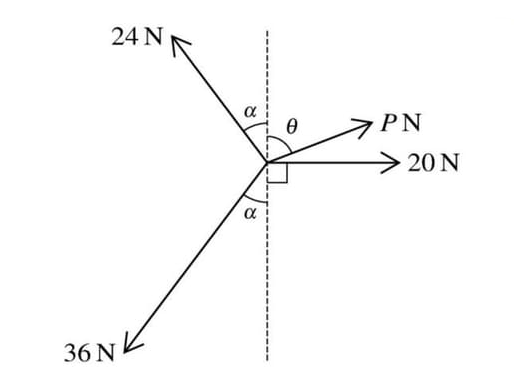
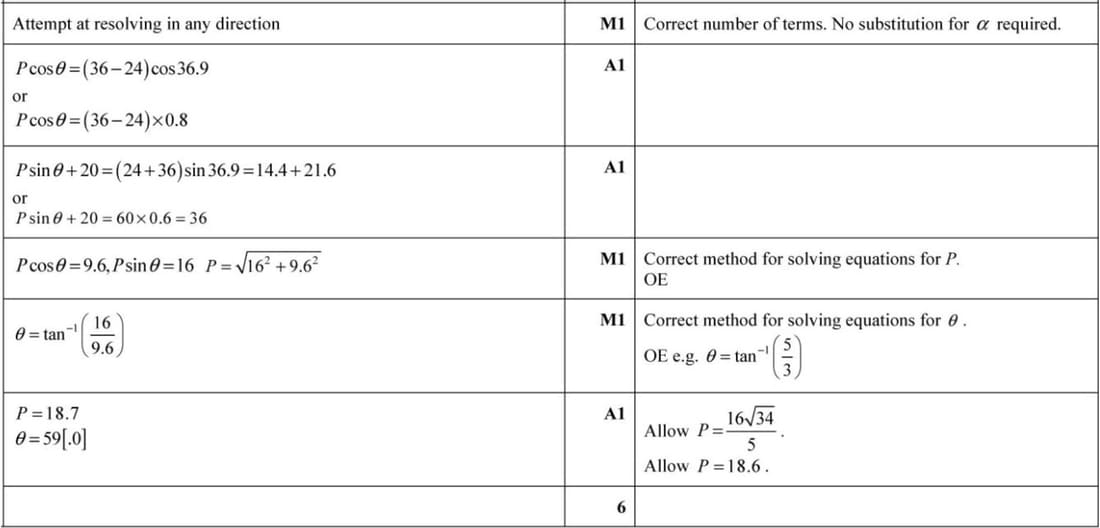
Coplanar forces of magnitudes 24 N, P N, 20 N, and 36 N act at a point in the directions shown in the diagram. The system is in equilibrium. Given that \(\sin \alpha = \frac{3}{5}\), find the values of \(P\) and \(\theta\).