Exam-Style Problems
⬅ Back to SubchapterFeb/Mar 2023 p42 q5
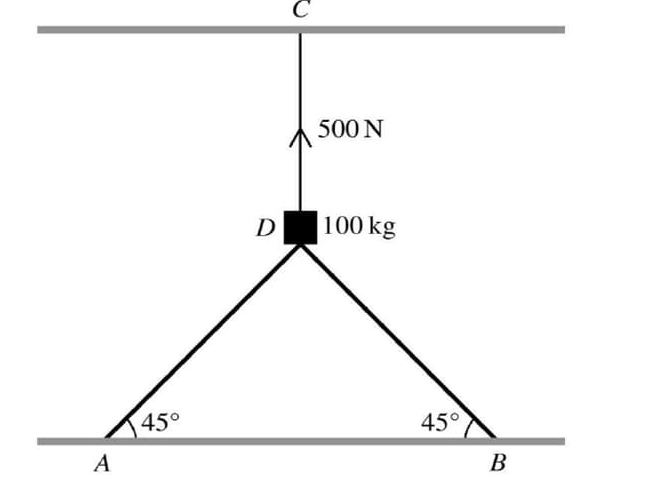
The diagram shows a block D of mass 100 kg supported by two sloping struts AD and BD, each attached at an angle of 45° to fixed points A and B respectively on a horizontal floor. The block is also held in place by a vertical rope CD attached to a fixed point C on a horizontal ceiling. The tension in the rope CD is 500 N and the block rests in equilibrium.
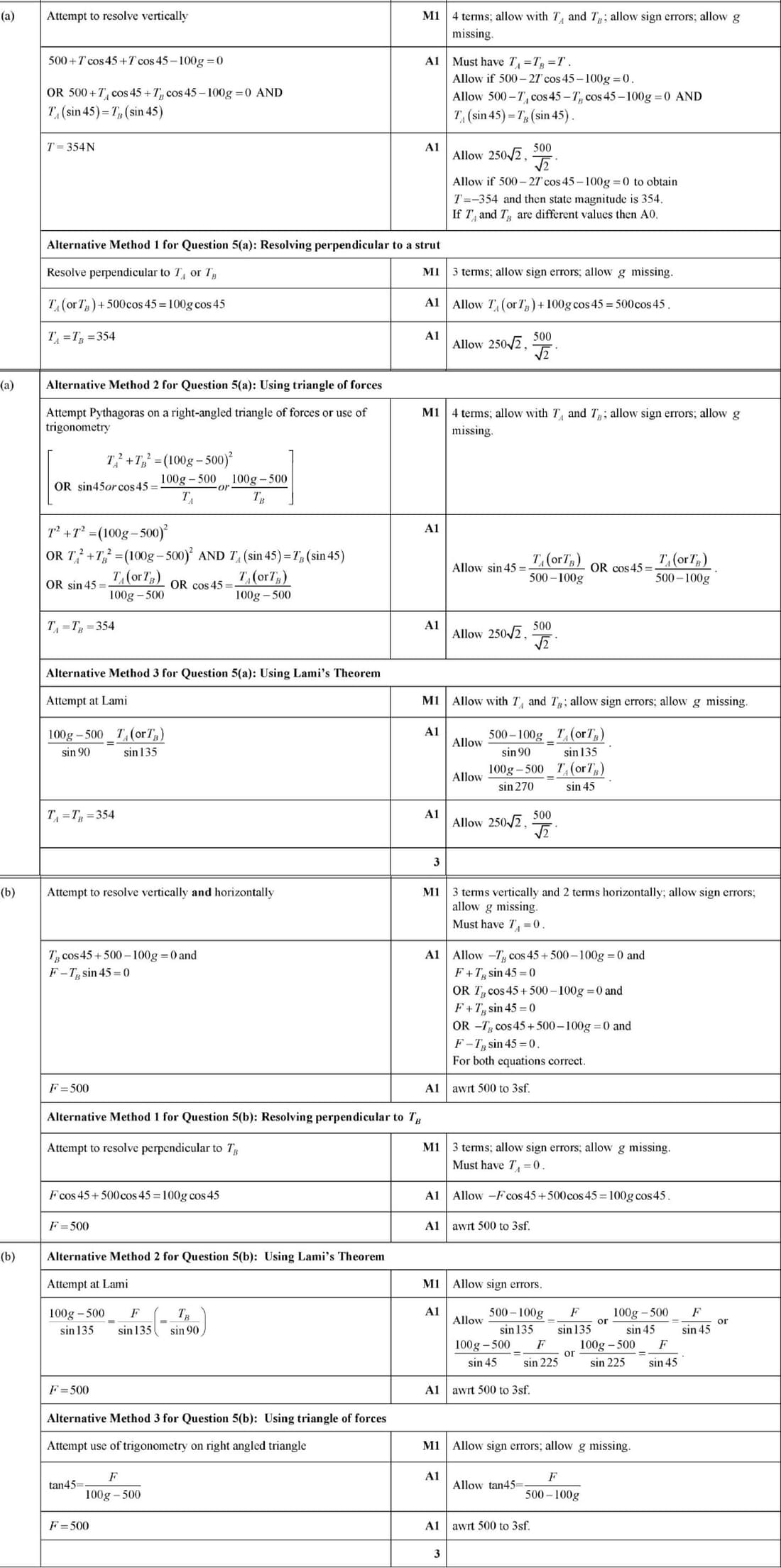
(a) Find the magnitude of the force in each of the struts AD and BD.
A horizontal force of magnitude F N is applied to the block in a direction parallel to AB.
(b) Find the value of F for which the magnitude of the force in the strut AD is zero.
Nov 2022 p42 q3
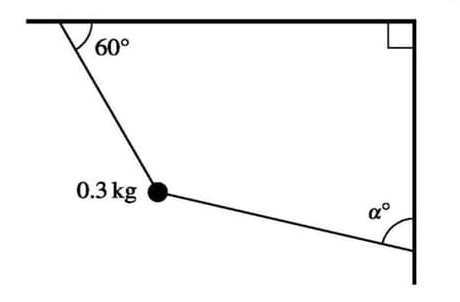
A particle of mass 0.3 kg is held at rest by two light inextensible strings. One string is attached at an angle of 60° to a horizontal ceiling. The other string is attached at an angle \(\alpha\)° to a vertical wall (see diagram). The tension in the string attached to the ceiling is 4 N.
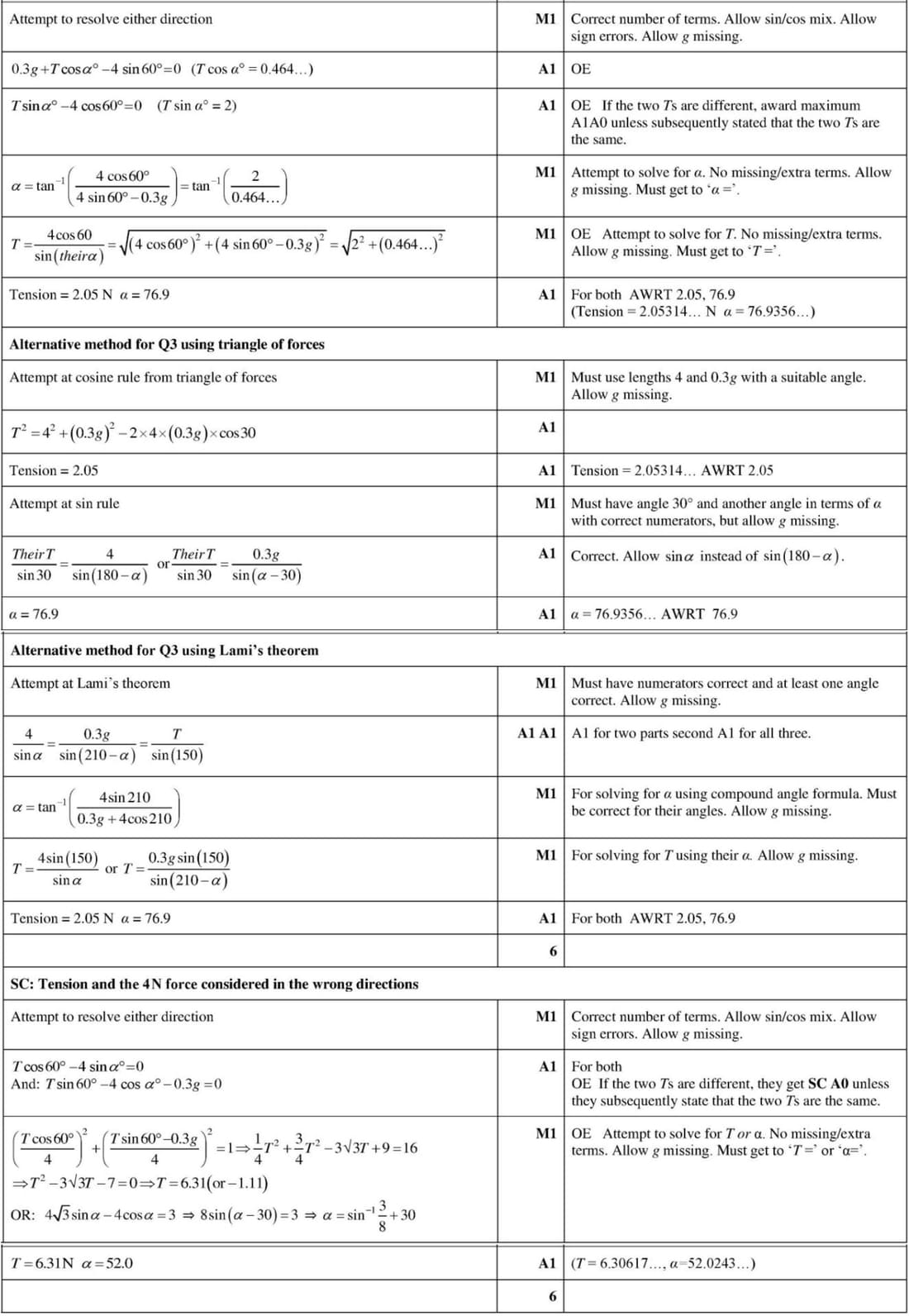
Find the tension in the string which is attached to the wall and find the value of \(\alpha\).
Nov 2021 p43 q2
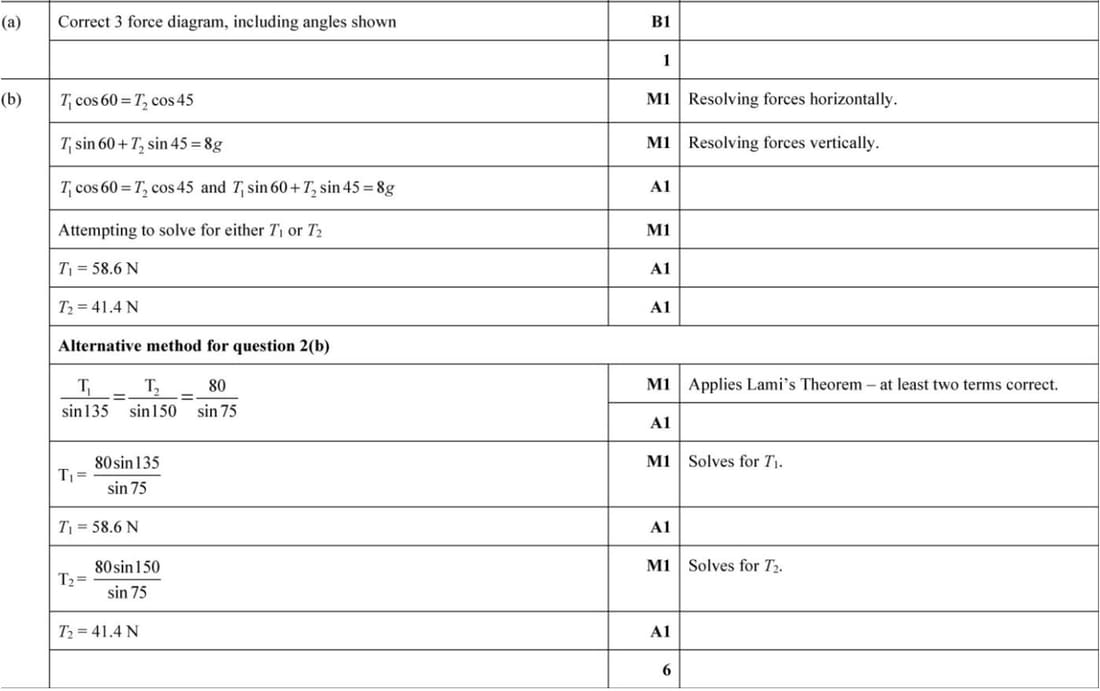
A particle of mass 8 kg is suspended in equilibrium by two light inextensible strings which make angles of 60° and 45° above the horizontal.
(a) Draw a diagram showing the forces acting on the particle.
(b) Find the tensions in the strings.

Nov 2021 p42 q6
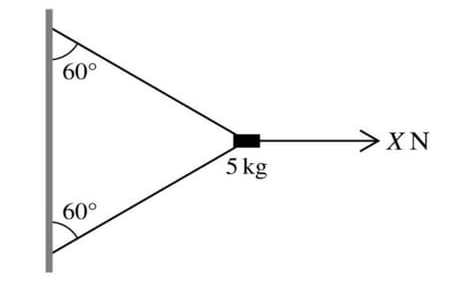
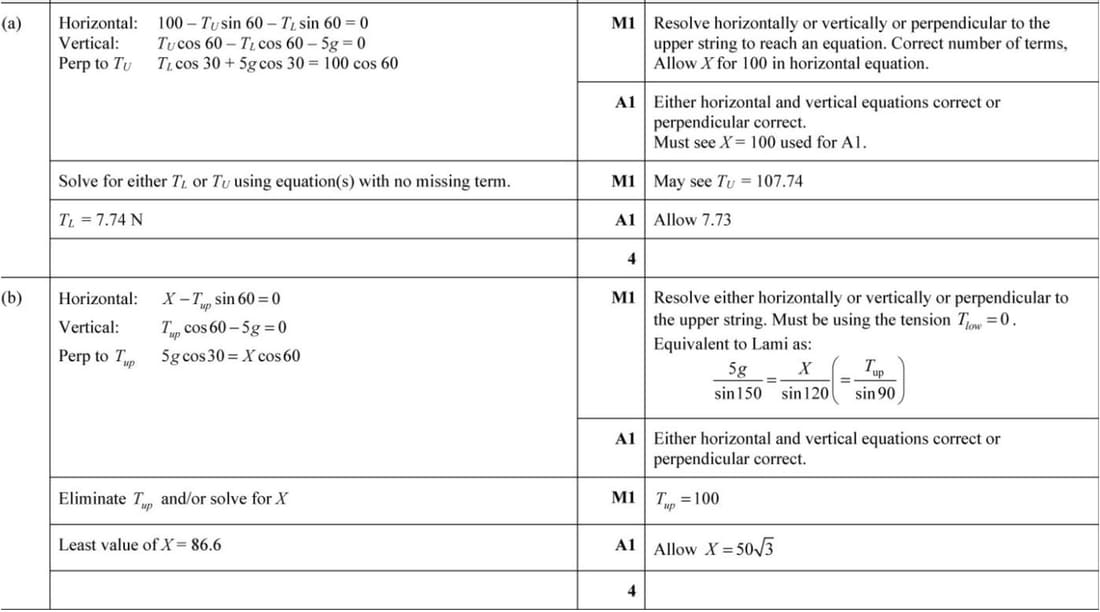
A block of mass 5 kg is held in equilibrium near a vertical wall by two light strings and a horizontal force of magnitude \(X\) N, as shown in the diagram. The two strings are both inclined at 60° to the vertical.
(a) Given that \(X = 100\), find the tension in the lower string.
(b) Find the least value of \(X\) for which the block remains in equilibrium in the position shown.
Feb/Mar 2021 p42 q3
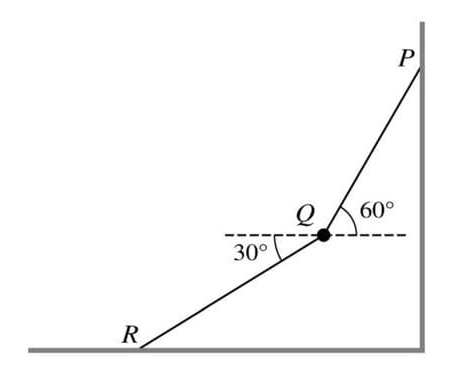
A particle Q of mass 0.2 kg is held in equilibrium by two light inextensible strings PQ and QR. P is a fixed point on a vertical wall and R is a fixed point on a horizontal floor. The angles which strings PQ and QR make with the horizontal are 60° and 30° respectively (see diagram).
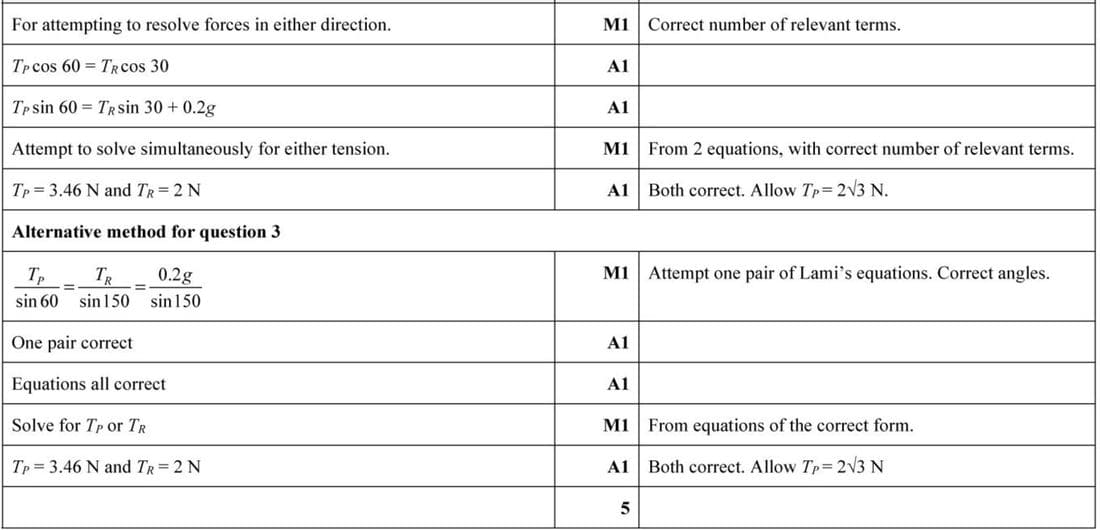
Find the tensions in the two strings.