Exam-Style Problems
⬅ Back to SubchapterJune 2013 p42 q3
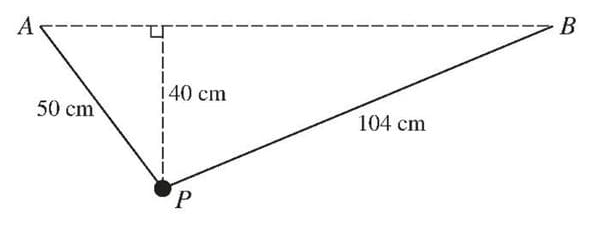
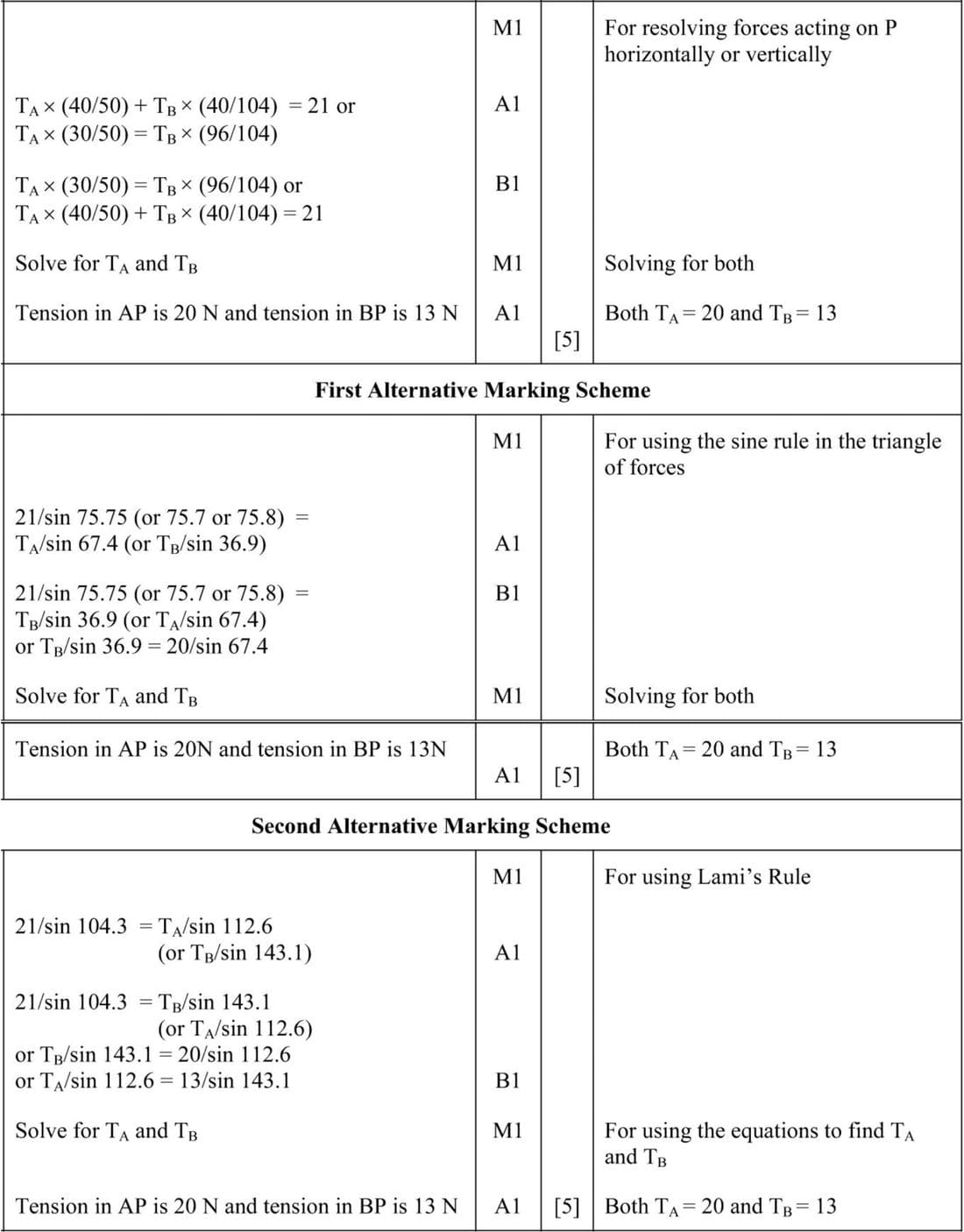
A particle P of mass 2.1 kg is attached to one end of each of two light inextensible strings. The other ends of the strings are attached to points A and B which are at the same horizontal level. P hangs in equilibrium at a point 40 cm below the level of A and B, and the strings PA and PB have lengths 50 cm and 104 cm respectively (see diagram). Show that the tension in the string PA is 20 N, and find the tension in the string PB.
Nov 2023 p41 q2
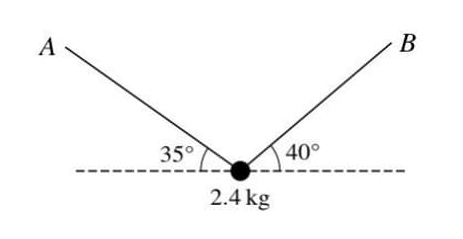
A particle of mass 2.4 kg is held in equilibrium by two light inextensible strings, one of which is attached to point A and the other attached to point B. The strings make angles of 35° and 40° with the horizontal (see diagram).
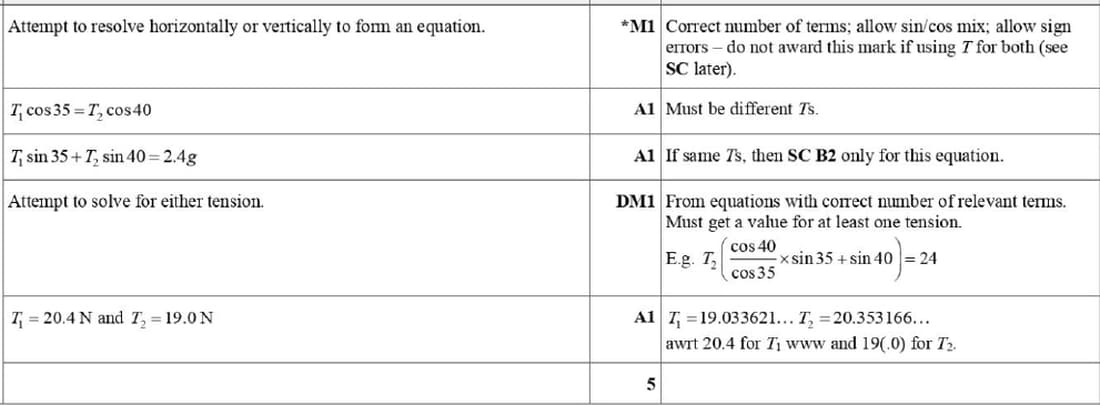
Find the tension in each of the two strings.
Nov 2012 p43 q4
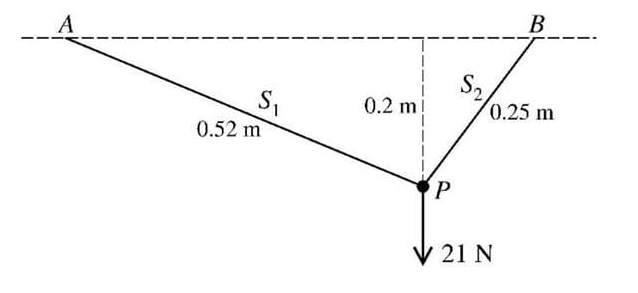
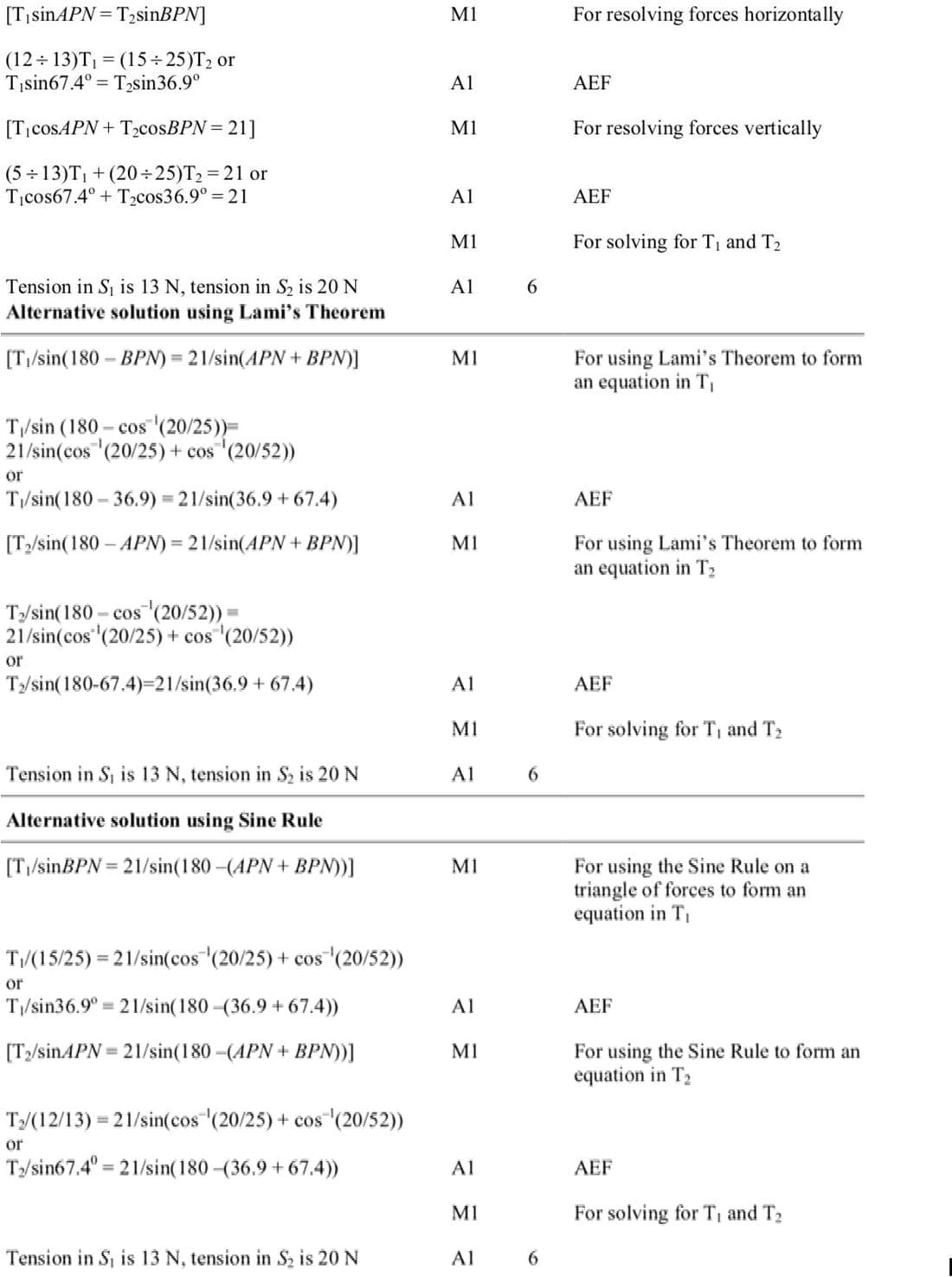
A particle P of weight 21 N is attached to one end of each of two light inextensible strings, S1 and S2, of lengths 0.52 m and 0.25 m respectively. The other end of S1 is attached to a fixed point A, and the other end of S2 is attached to a fixed point B at the same horizontal level as A. The particle P hangs in equilibrium at a point 0.2 m below the level of AB with both strings taut (see diagram). Find the tension in S1 and the tension in S2.
Nov 2010 p41 q3
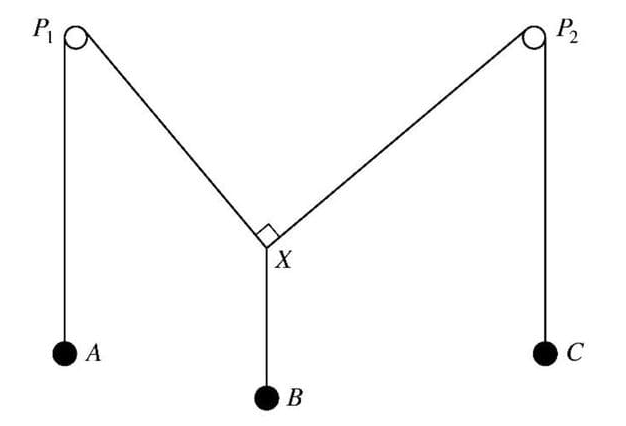
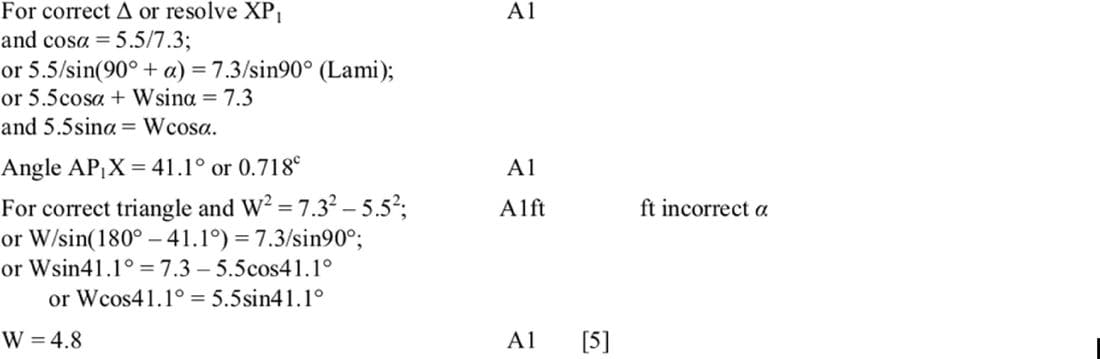
The diagram shows three particles A, B, and C hanging freely in equilibrium, each being attached to the end of a string. The other ends of the three strings are tied together and are at the point X. The strings carrying A and C pass over smooth fixed horizontal pegs P1 and P2 respectively. The weights of A, B, and C are 5.5 N, 7.3 N, and W N respectively, and the angle P1XP2 is a right angle. Find the angle AP1X and the value of W.
Nov 2005 p4 q3
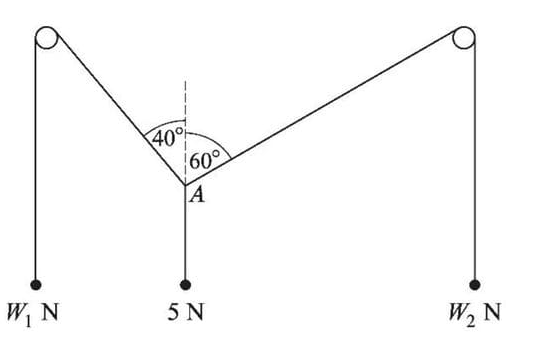
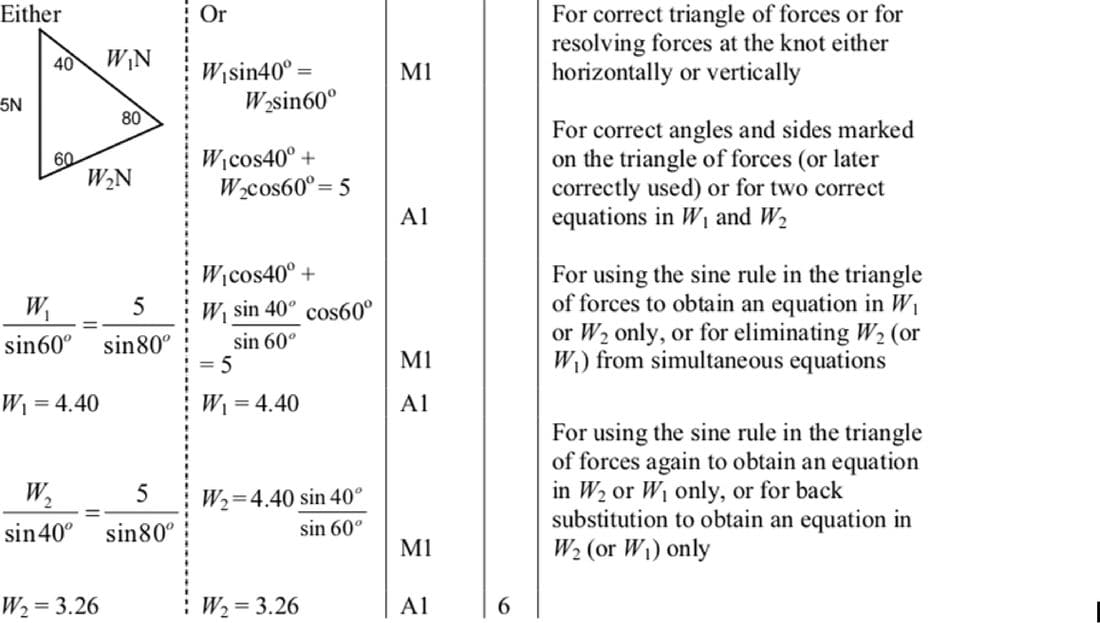
Each of three light strings has a particle attached to one of its ends. The other ends of the strings are tied together at a point A. The strings are in equilibrium with two of them passing over fixed smooth horizontal pegs, and with the particles hanging freely. The weights of the particles, and the angles between the sloping parts of the strings and the vertical, are as shown in the diagram. Find the values of \(W_1\) and \(W_2\).