9709 P11 - Jun 2020 - Q3
885
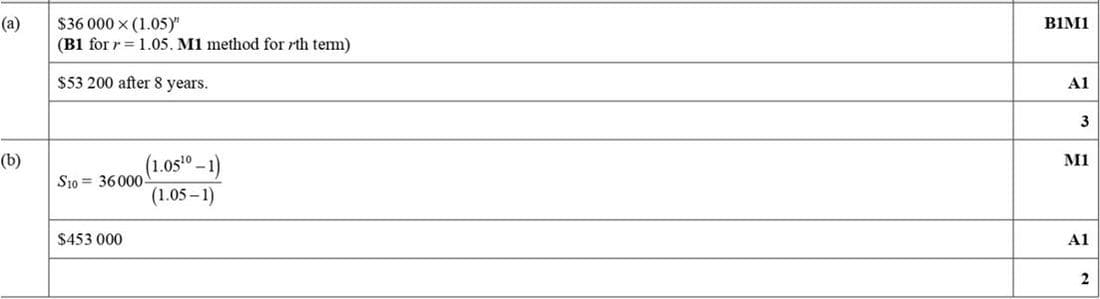
Each year the selling price of a diamond necklace increases by 5% of the price the year before. The selling price of the necklace in the year 2000 was $36,000.
(a) Write down an expression for the selling price of the necklace n years later and hence find the selling price in 2008.
(b) The company that makes the necklace only sells one each year. Find the total amount of money obtained in the ten-year period starting in the year 2000.