9709 P42 - Jun 2011 - Q3
4075
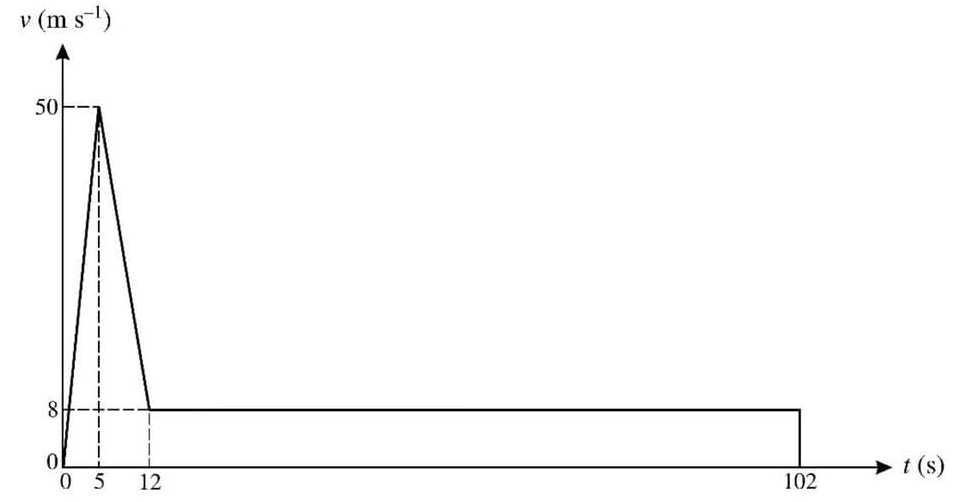
The velocity-time graph shown models the motion of a parachutist falling vertically. There are four stages in the motion:
- falling freely with the parachute closed,
- decelerating at a constant rate with the parachute open,
- falling with constant speed with the parachute open,
- coming to rest instantaneously on hitting the ground.
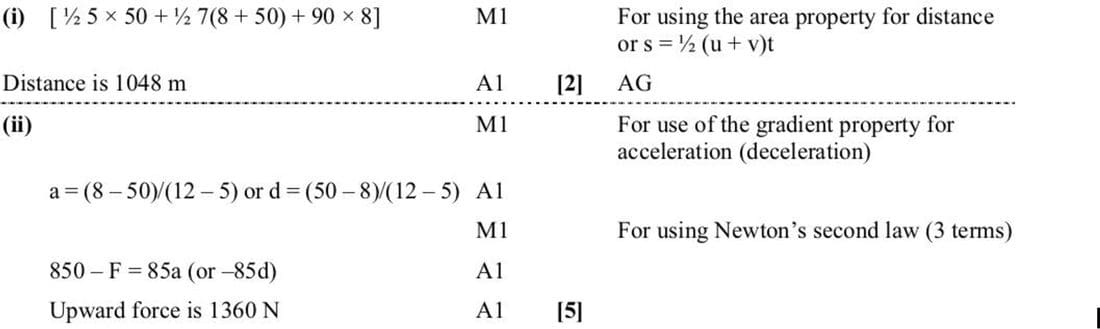
(i) Show that the total distance fallen is 1048 m.
The weight of the parachutist is 850 N.
(ii) Find the upward force on the parachutist due to the parachute, during the second stage.