9709 P4 - Nov 2004 - Q5
3825
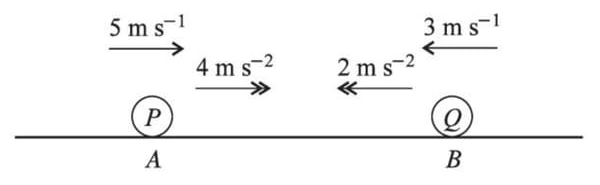
Particles P and Q start from points A and B respectively, at the same instant, and move towards each other in a horizontal straight line. The initial speeds of P and Q are 5 m s-1 and 3 m s-1 respectively. The accelerations of P and Q are constant and equal to 4 m s-2 and 2 m s-2 respectively (see diagram).
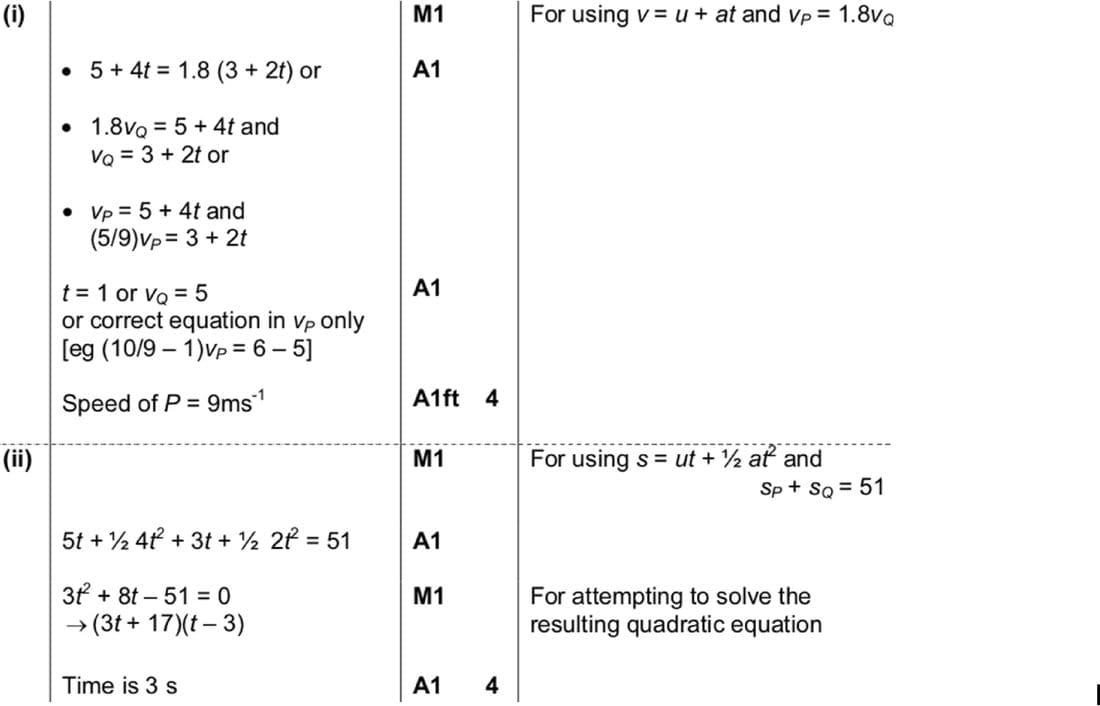
- Find the speed of P at the instant when the speed of P is 1.8 times the speed of Q.
- Given that AB = 51 m, find the time taken from the start until P and Q meet.