9709 P43 - Nov 2018 - Q4
3811
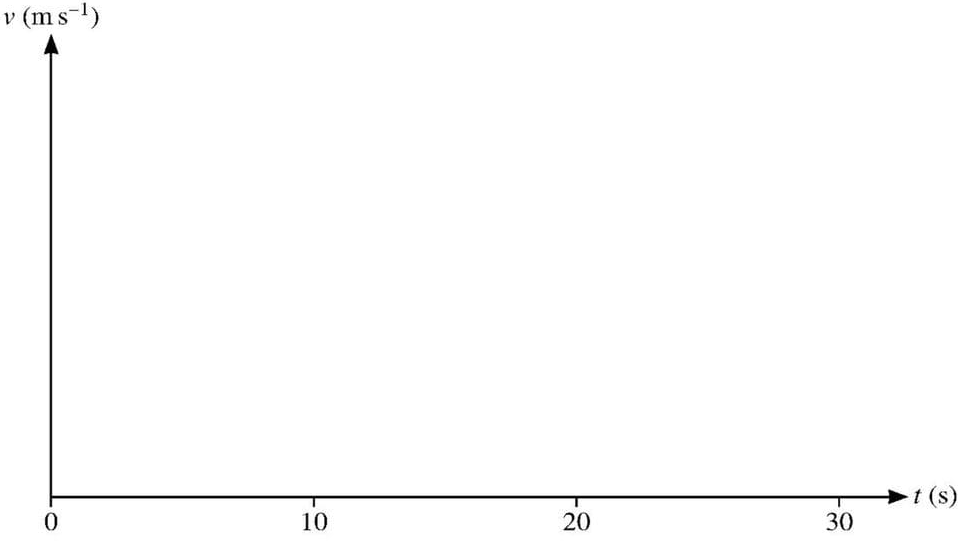
A runner sets off from a point P at time t = 0, where t is in seconds. The runner starts from rest and accelerates at 1.2 m/s2 for 5 s. For the next 12 s the runner moves at constant speed before decelerating uniformly over a period of 3 s, coming to rest at Q. A cyclist sets off from P at time t = 10 and accelerates uniformly for 10 s, before immediately decelerating uniformly to rest at Q at time t = 30.
- Sketch the velocity-time graph for the runner and show that the distance PQ is 96 m.
- Find the magnitude of the acceleration of the cyclist.
Solutions locked. Please sign in with access to view them.