9709 P42 - Nov 2013 - Q6
3602
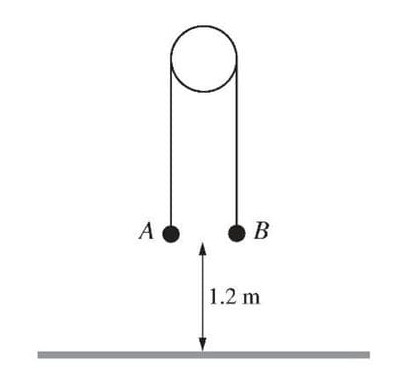
Particles A of mass 0.4 kg and B of mass 1.6 kg are attached to the ends of a light inextensible string which passes over a fixed smooth pulley. A is held at rest and B hangs freely, with both straight parts of the string vertical and both particles at a height of 1.2 m above the floor (see diagram). A is released and both particles start to move.
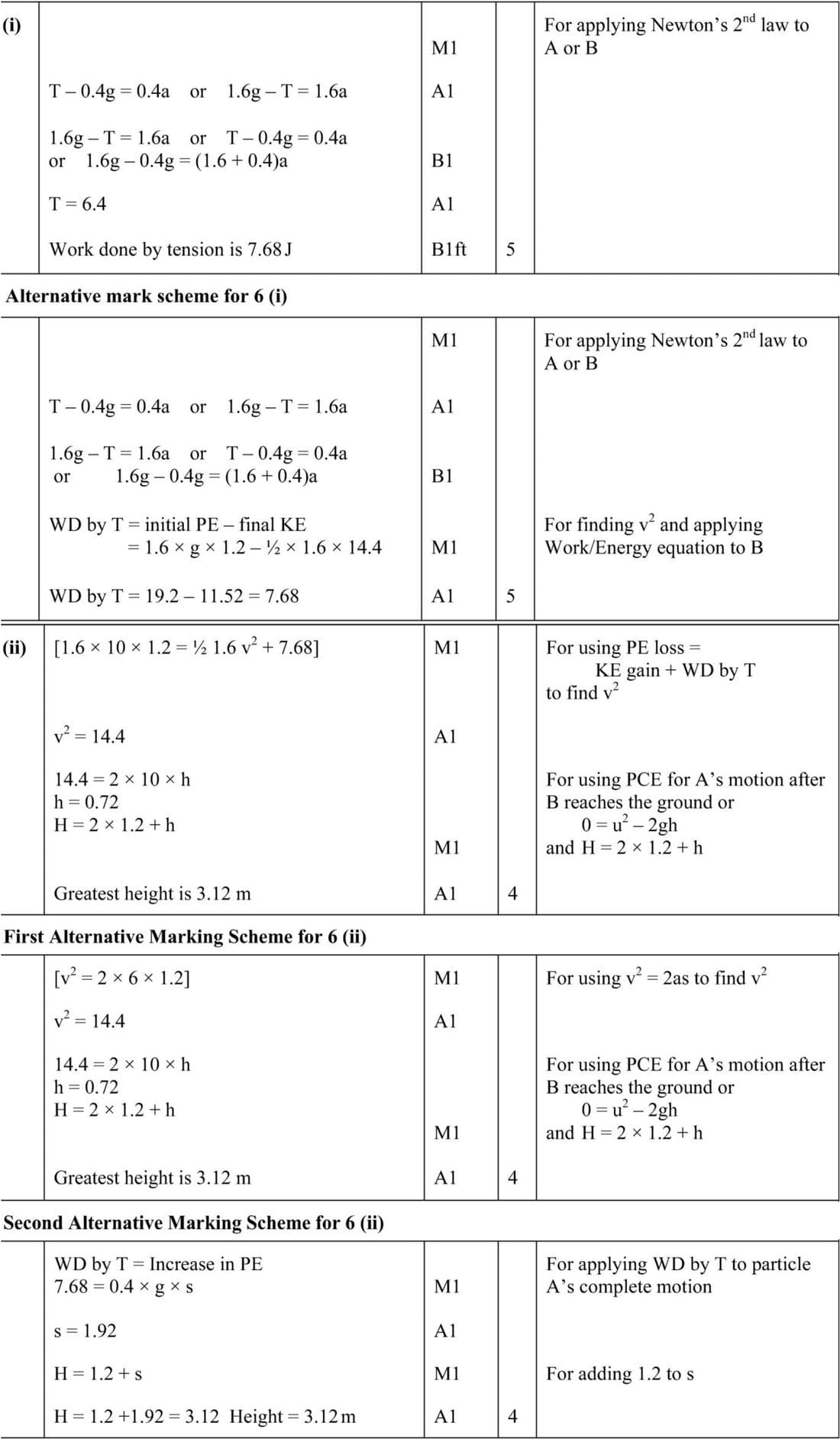
- Find the work done on B by the tension in the string, as B moves to the floor.
- When particle B reaches the floor it remains at rest. Particle A continues to move upwards. Find the greatest height above the floor reached by particle A.