9709 P42 - Nov 2016 - Q4
3597
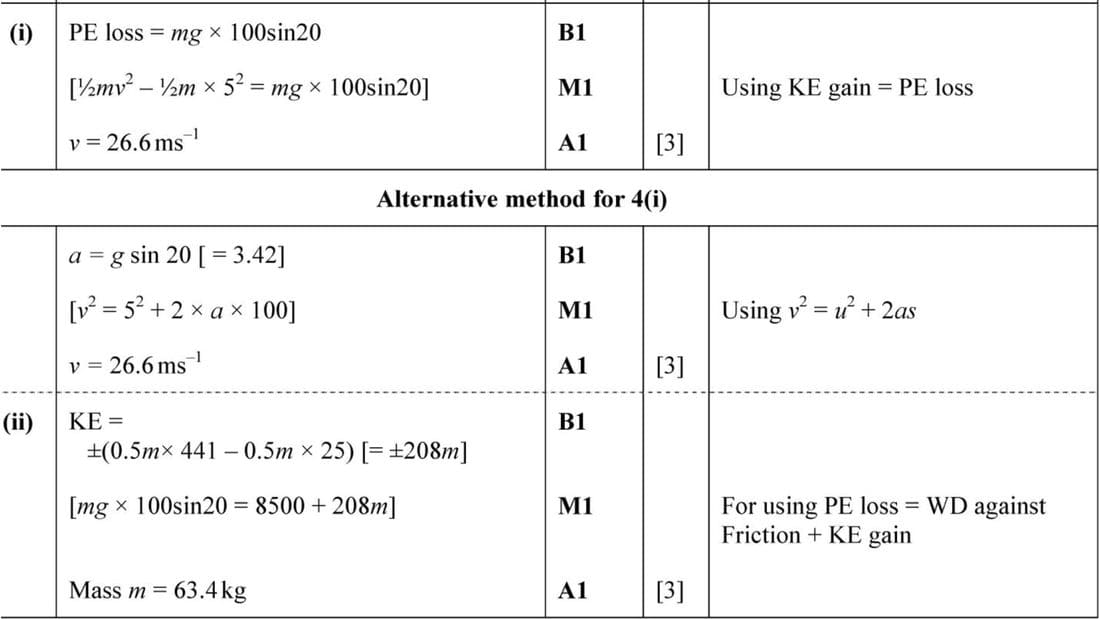
A girl on a sledge starts, with a speed of 5 m/s, at the top of a slope of length 100 m which is at an angle of 20° to the horizontal. The sledge slides directly down the slope.
- Given that there is no resistance to the sledge’s motion, find the speed of the sledge at the bottom of the slope.
- It is given instead that the sledge experiences a resistance to motion such that the total work done against the resistance is 8500 J, and the speed of the sledge at the bottom of the slope is 21 m/s. Find the total mass of the girl and the sledge.