9709 P4 - Nov 2007 - Q4
3579
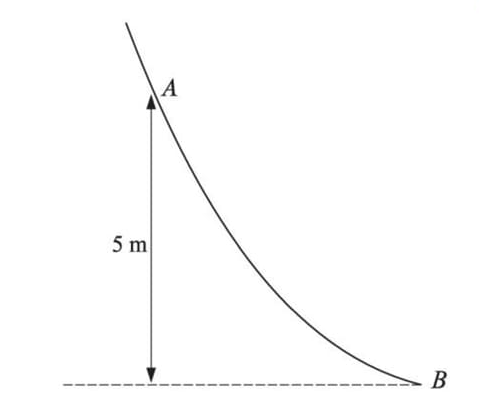
The diagram shows the vertical cross-section of a surface. A and B are two points on the cross-section, and A is 5 m higher than B. A particle of mass 0.35 kg passes through A with speed 7 m/s, moving on the surface towards B.
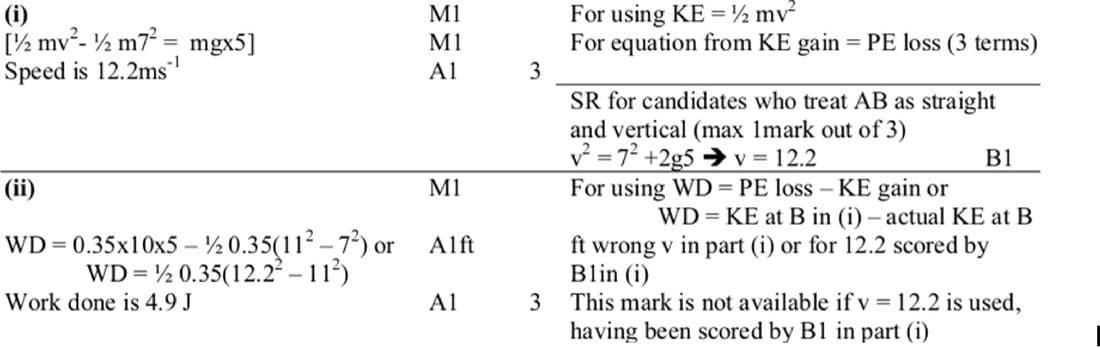
(i) Assuming that there is no resistance to motion, find the speed with which the particle reaches B.
(ii) Assuming instead that there is a resistance to motion, and that the particle reaches B with speed 11 m/s, find the work done against this resistance as the particle moves from A to B.