9709 P43 - Jun 2011 - Q6
3564
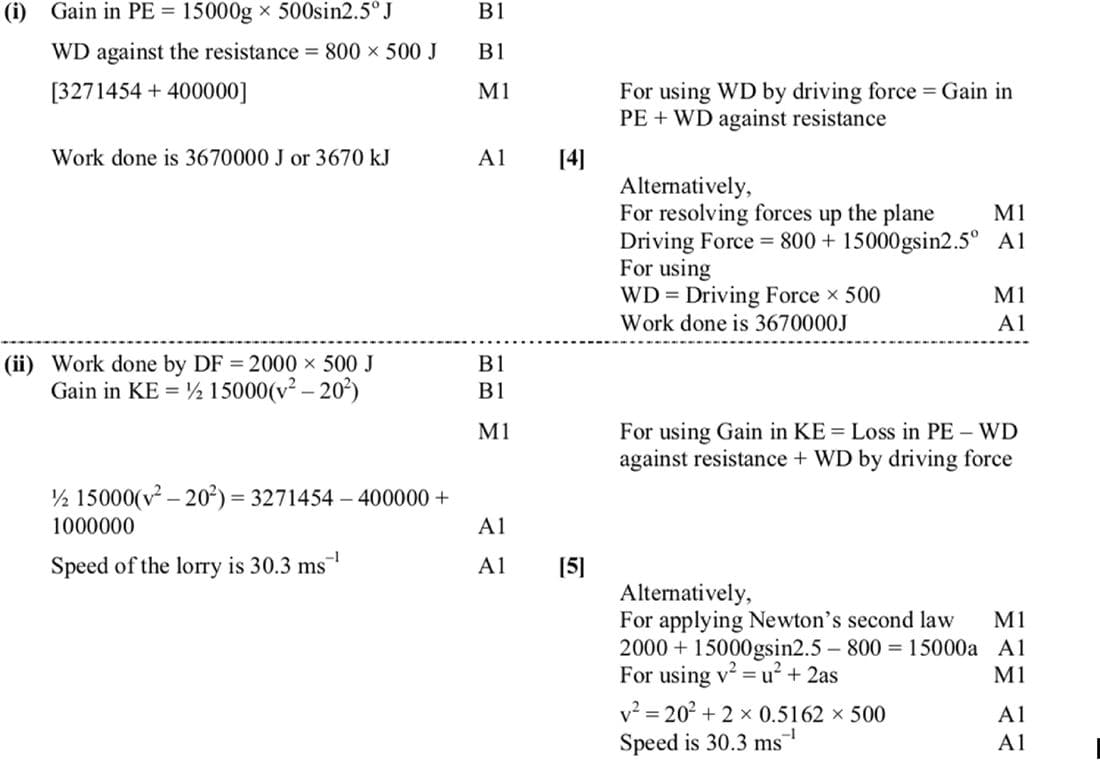
A lorry of mass 15,000 kg climbs a hill of length 500 m at a constant speed. The hill is inclined at 2.5° to the horizontal. The resistance to the lorry’s motion is constant and equal to 800 N.
- Find the work done by the lorry’s driving force.
On its return journey the lorry reaches the top of the hill with speed 20 m/s and continues down the hill with a constant driving force of 2000 N. The resistance to the lorry’s motion is again constant and equal to 800 N.
- Find the speed of the lorry when it reaches the bottom of the hill.