9709 P41 - Jun 2023 - Q2 - 6 marks
3548
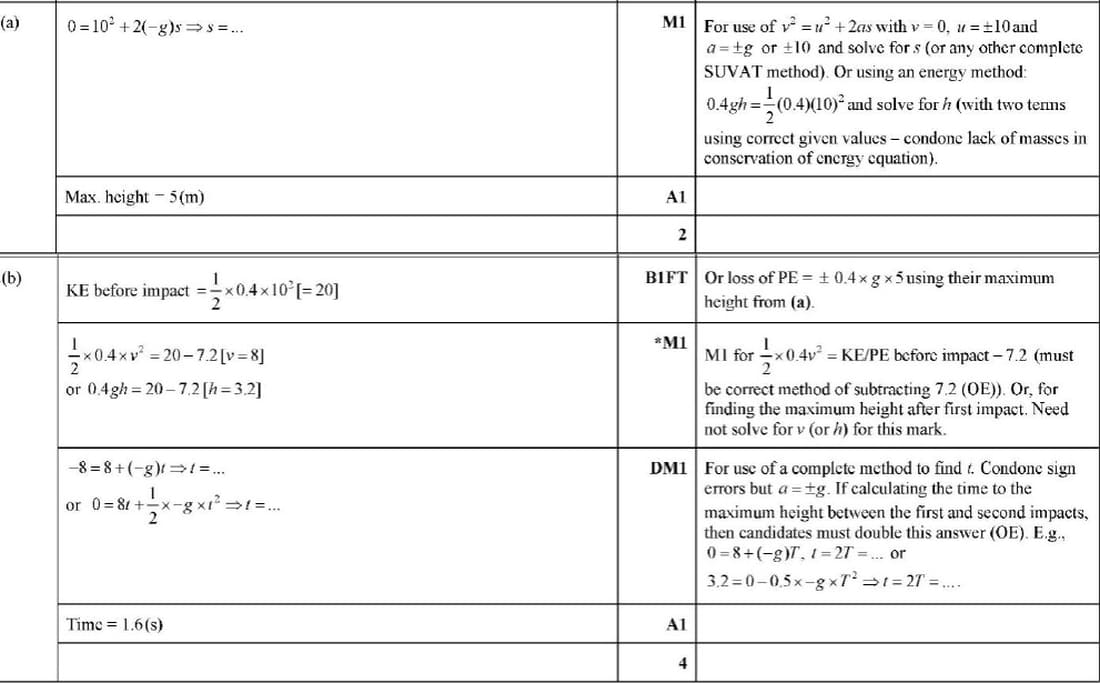
A particle P of mass 0.4 kg is projected vertically upwards from horizontal ground with speed 10 m s-1.
(a) Find the greatest height above the ground reached by P.
When P reaches the ground again, it bounces vertically upwards. At the first instant that it hits the ground, P loses 7.2 J of energy.
(b) Find the time between the first and second instants at which P hits the ground.