9709 P43 - Nov 2018 - Q6
3425
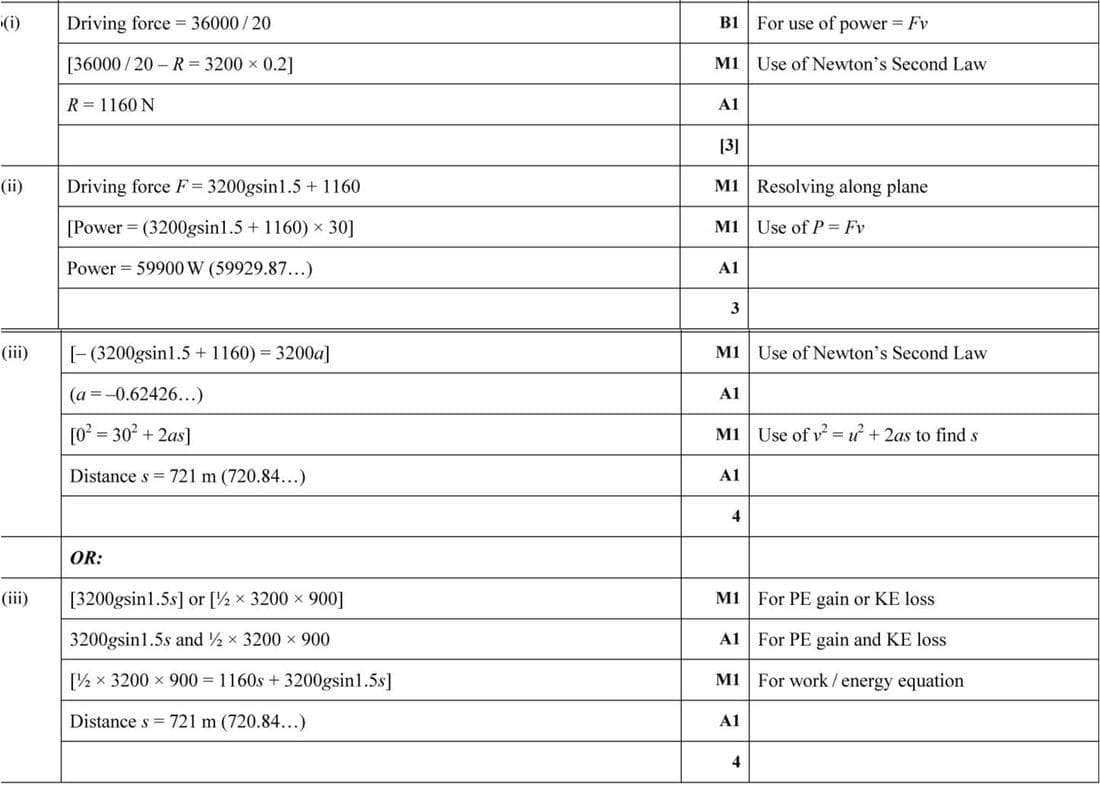
A van of mass 3200 kg travels along a horizontal road. The power of the van’s engine is constant and equal to 36 kW, and there is a constant resistance to motion acting on the van.
- When the speed of the van is 20 m s-1, its acceleration is 0.2 m s-2. Find the resistance force.
- When the van is travelling at 30 m s-1, it begins to ascend a hill inclined at 1.5° to the horizontal. The power is increased and the resistance force is still equal to the value found in part (i). Find the power required to maintain this speed of 30 m s-1.
- The engine is now stopped, with the van still travelling at 30 m s-1, and the van decelerates to rest. Find the distance the van moves up the hill from the point at which the engine is stopped until it comes to rest.