9709 P6 - Nov 2002 - Q6
3349
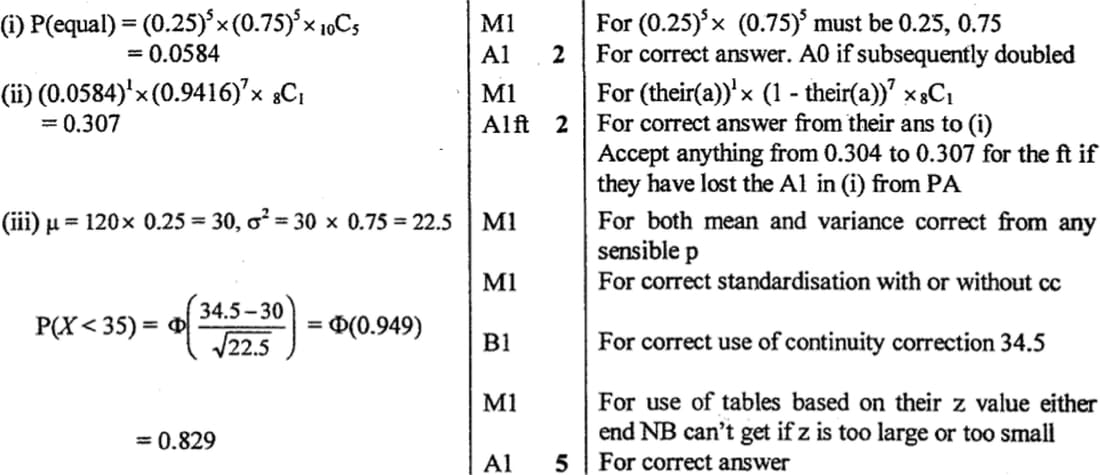
(i) A manufacturer of biscuits produces 3 times as many cream ones as chocolate ones. Biscuits are chosen randomly and packed into boxes of 10. Find the probability that a box contains equal numbers of cream biscuits and chocolate biscuits.
(ii) A random sample of 8 boxes is taken. Find the probability that exactly 1 of them contains equal numbers of cream biscuits and chocolate biscuits.
(iii) A large box of randomly chosen biscuits contains 120 biscuits. Using a suitable approximation, find the probability that it contains fewer than 35 chocolate biscuits.