9709 P62 - Nov 2019 - Q6
3125
The heights, in metres, of fir trees in a large forest have a normal distribution with mean 40 and standard deviation 8.
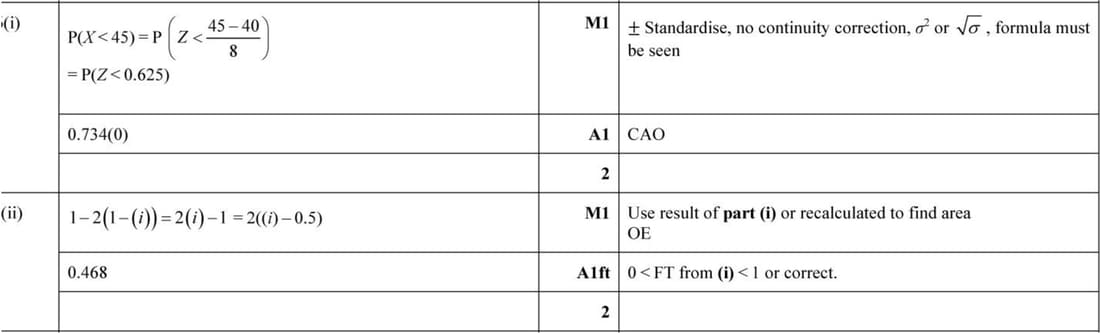
- Find the probability that a fir tree chosen at random in this forest has a height less than 45 metres.
- Find the probability that a fir tree chosen at random in this forest has a height within 5 metres of the mean.