9709 P63 - Nov 2019 - Q1
2681
There are 300 students at a music college. All students play exactly one of the guitar, the piano or the flute. The numbers of male and female students that play each of the instruments are given in the following table.
| Guitar | Piano | Flute | |
|---|---|---|---|
| Female students | 62 | 35 | 43 |
| Male students | 78 | 40 | 42 |
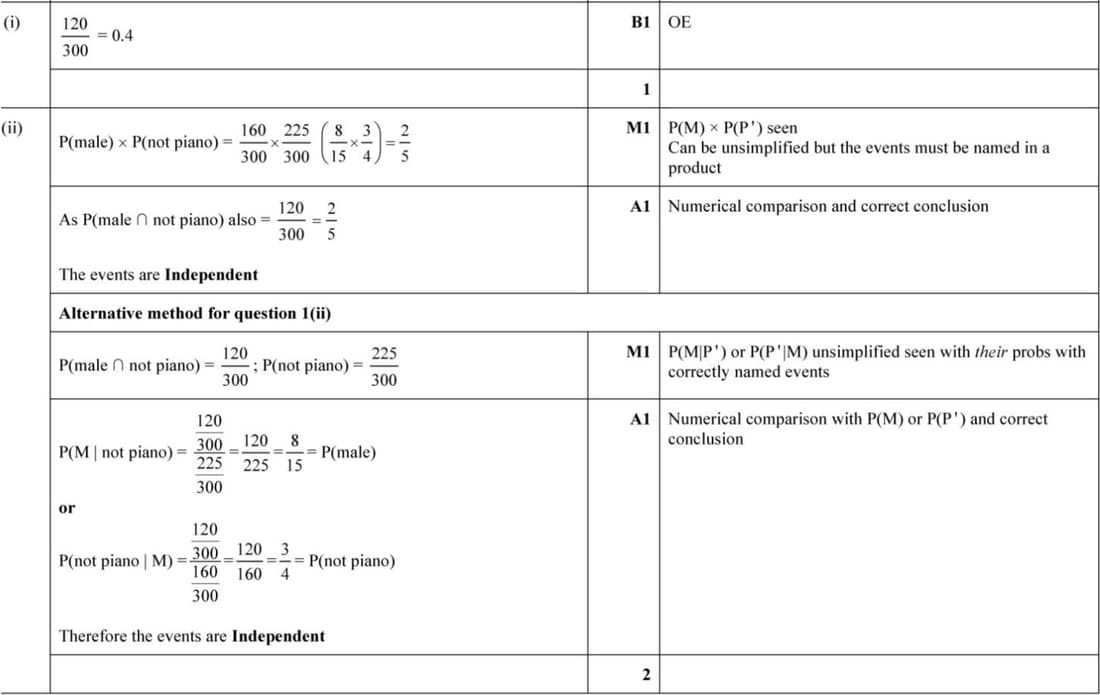
- Find the probability that a randomly chosen student at the college is a male who does not play the piano. [1]
- Determine whether the events ‘a randomly chosen student is male’ and ‘a randomly chosen student does not play the piano’ are independent, justifying your answer. [2]