9709 P51 - Jun 2020 - Q7
2421
The numbers of chocolate bars sold per day in a cinema over a period of 100 days are summarised in the following table.
| Number of chocolate bars sold | 1–10 | 11–15 | 16–30 | 31–50 | 51–60 |
|---|---|---|---|---|---|
| Number of days | 18 | 24 | 30 | 20 | 8 |
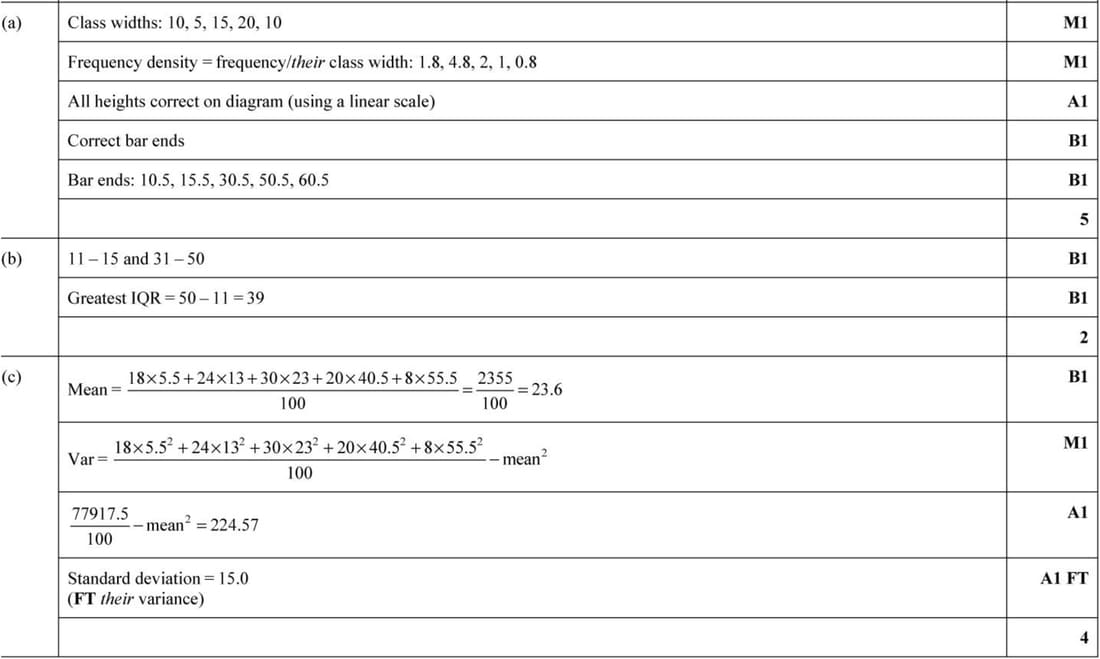
(a) Draw a histogram to represent this information.
(b) What is the greatest possible value of the interquartile range for the data?
(c) Calculate estimates of the mean and standard deviation of the number of chocolate bars sold.