9709 P12 - Nov 2012 - Q3
1187
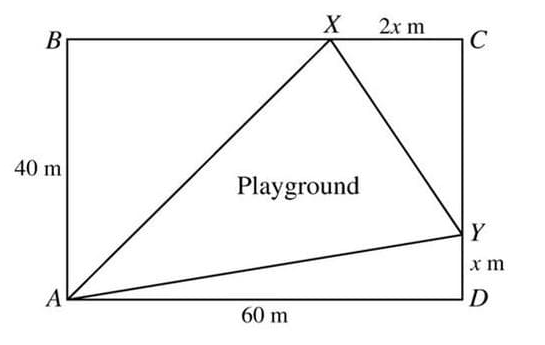
The diagram shows a plan for a rectangular park ABCD, in which AB = 40 m and AD = 60 m. Points X and Y lie on BC and CD respectively and AX, XY and YA are paths that surround a triangular playground. The length of DY is x m and the length of XC is 2x m.
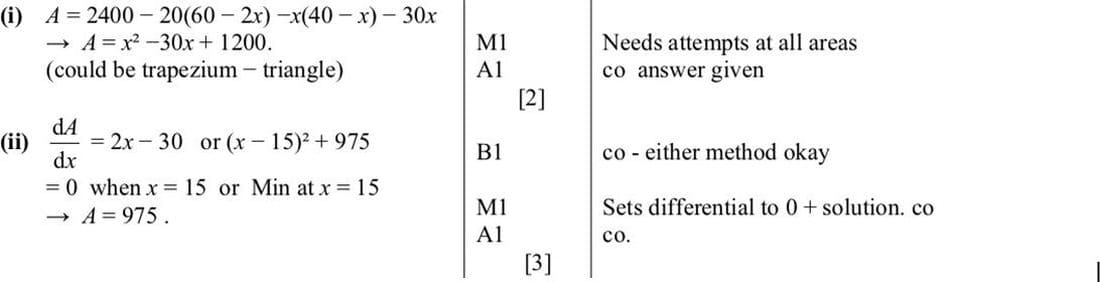
- Show that the area, A m², of the playground is given by A = x² - 30x + 1200.
- Given that x can vary, find the minimum area of the playground.